Places · 3 min read
The Appian Way: the toll that saved a road, and the question at the crossroads
Why the Via Appia survived while every other Roman road was paved over, who Cecilia Metella was, and the question Peter asked at a fork in the road.
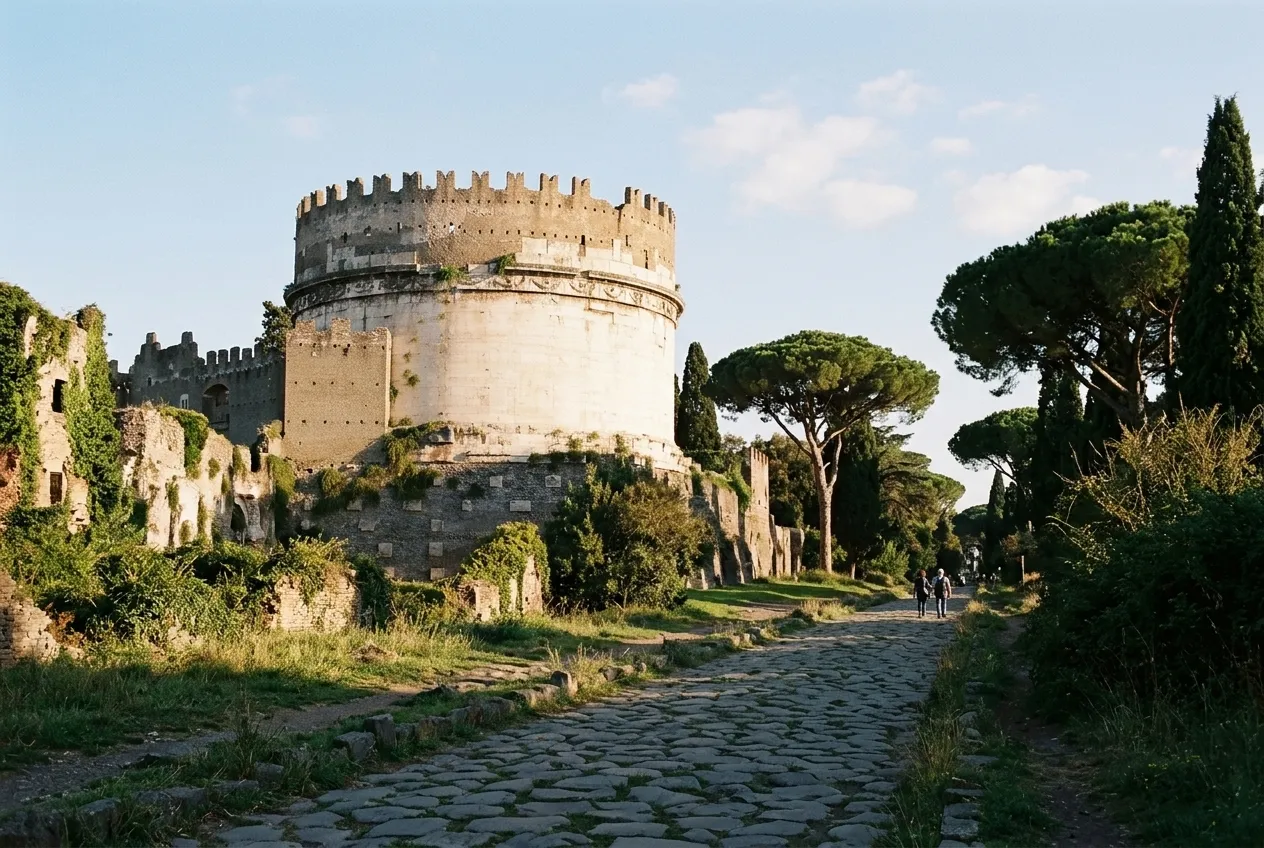
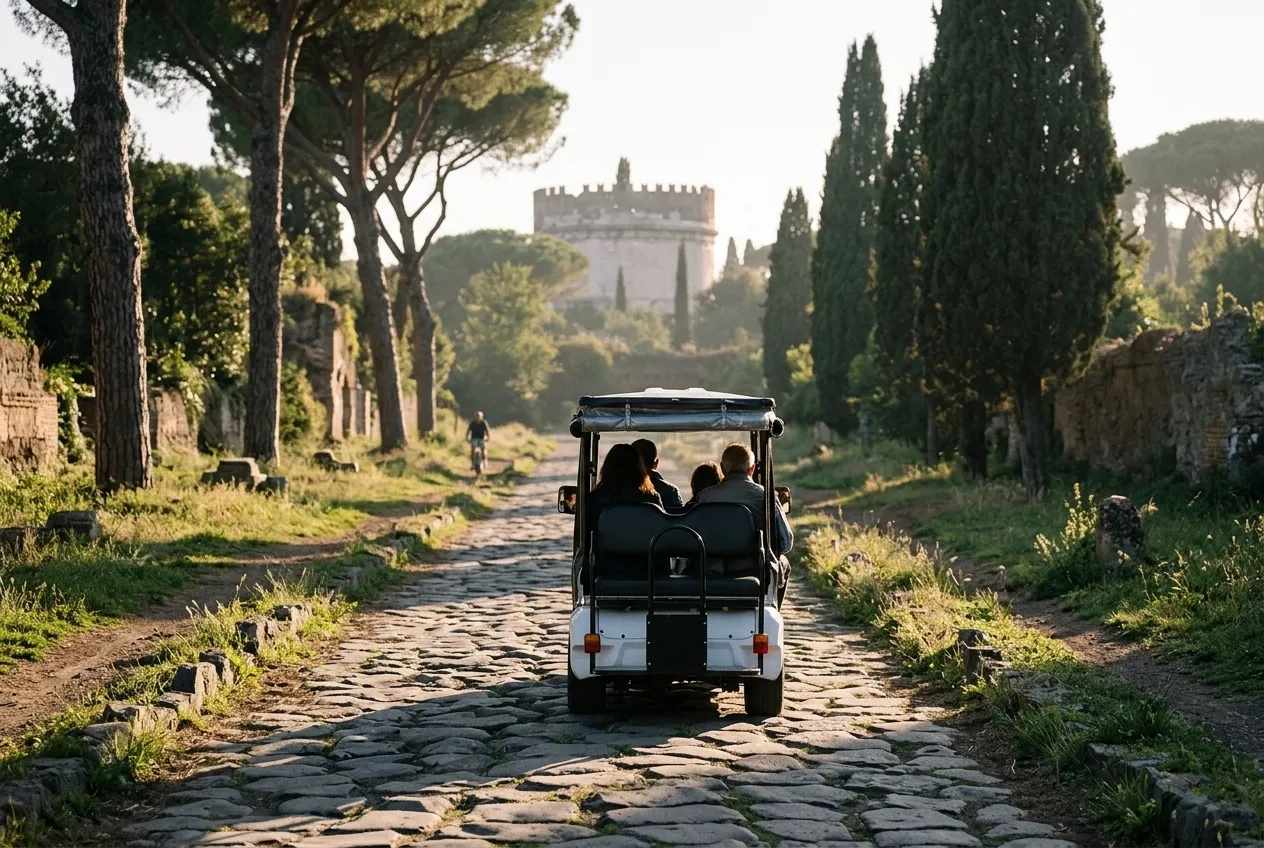
The Romans built roads to last, and almost all of them are now under asphalt. The Appian Way is the exception: kilometres of basalt paving, tombs and umbrella pines running out of the city exactly where they ran in 312 BC. It survived for a reason nobody planned. A medieval family put a toll on it.
The queen of roads
Appius Claudius the Censor opened the road in 312 BC to move troops south towards Capua; later it reached Brindisi, the port for Greece and the East, and the poet Statius called it the queen of roads. Romans were not allowed to bury their dead inside the walls, so the first miles outside the gate became an avenue of tombs: the rich competed for the best plots, and the drive out of town was a parade of family names. That is what you see today, in ruins, between the pines.
The toll
In 1302 Pope Boniface VIII handed the biggest of those tombs, the round mausoleum of Cecilia Metella, to his own family, the Caetani. They built a castle on top of it and a wall across the road, and began charging every traveller who passed. Merchants did what merchants do: they found another way. Traffic moved to a parallel road, the Via Appia Nuova, and the old Appia was slowly abandoned to shepherds, grass and poets. Nobody paved it, nobody built on it, and so it is still here. The Caetani’s greed was the best thing that ever happened to Roman archaeology.
Cecilia Metella
Of the woman inside the tomb we know almost nothing. She was the daughter of a general, Metellus Creticus, and the daughter-in-law of Crassus, the richest man in Rome, who had made his fortune buying up the property of the condemned and who paid for the young Julius Caesar’s career. Byron called her Crassus’s wife, which she was not. Her tomb is a drum of travertine eleven metres high, decorated with a frieze of ox skulls that gave the area its name, Capo di Bove; the brick battlements on top are the Caetani’s. A tomb this size, for a woman, in a world run by men, is the only thing it tells us about her, and it is a lot.
The circus
Just before the tomb, on the left, is the best-preserved chariot racetrack in the Roman world: the Circus of Maxentius, built around 309 for an emperor who lost his throne and his life three years later at the Milvian Bridge. It is half a kilometre long and held some 18,000 spectators. Look up at the vaults of the towers and you will see hundreds of clay jars set into the concrete to make it lighter. The obelisk that stands in Piazza Navona today was found lying here in pieces.
Domine, quo vadis?
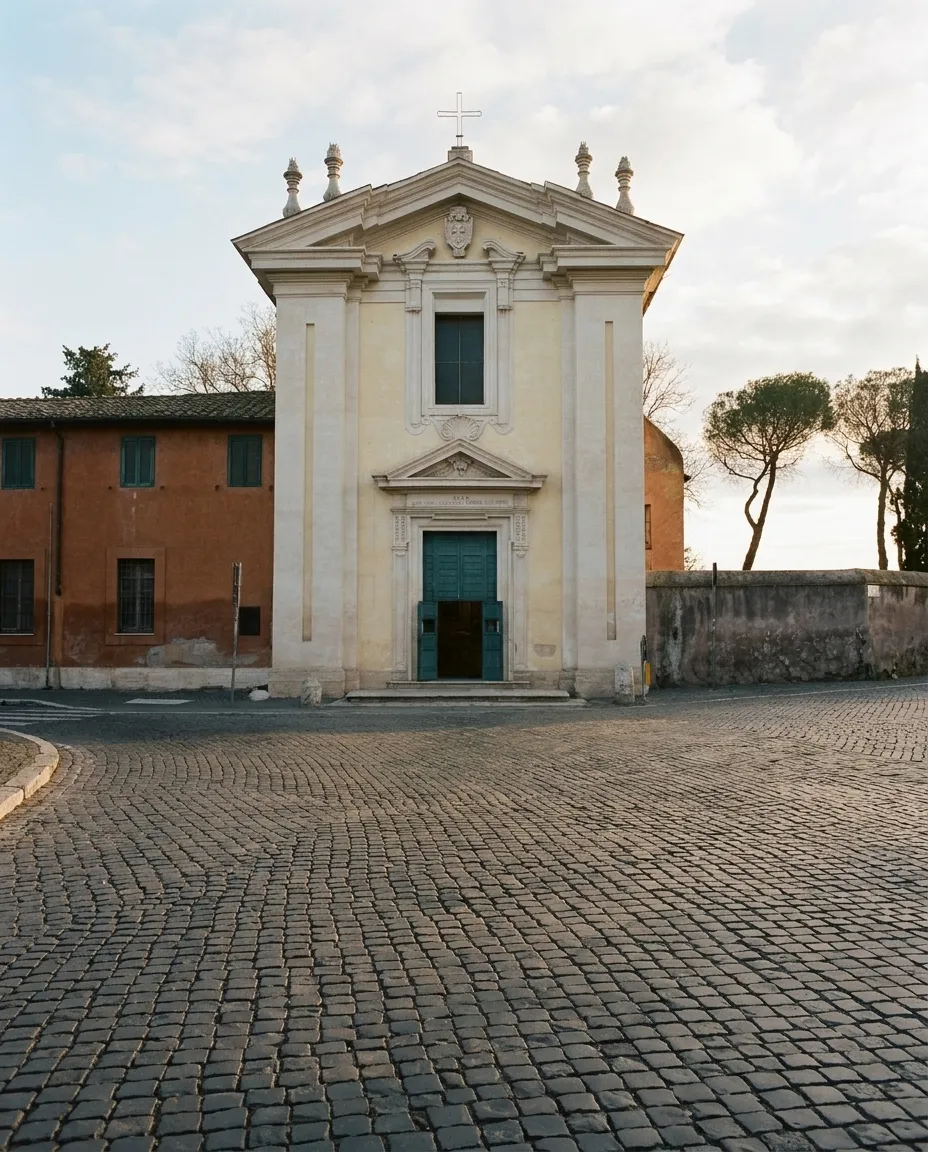
Nearer the city, where the road forks, stands a small plain church. The legend says that Peter, fleeing Rome and Nero’s persecution, met Christ on this spot walking the other way and asked him: “Lord, where are you going?” “To Rome, to be crucified again.” Peter understood, turned round and went back to his own death. Inside the church is a marble slab with two footprints said to be Christ’s; it is a copy, and the original is kept in the basilica of San Sebastiano a little further on. The slab is almost certainly an ancient votive offering left by a traveller giving thanks for a safe journey, which, on this road, is a story in itself.
Good to know
- Our Catacombs & Appian Way tour drives the old road in an electric golf cart, quiet enough to hear the cicadas, and includes the guided visit of the catacombs and the entrance to the Villa and Circus of Maxentius.
- On Sundays and holidays the Appia Antica is closed to cars and fills with cyclists and walkers.
- The paving stones are ancient and uneven: flat shoes, and a hat in summer. There is almost no shade on the open stretches.
See it from the cart
Drive past it with us
This place is on the route of these tours: a stop, a photo and the story told by your driver.