Places · 4 min read
Castel Sant'Angelo: an emperor's tomb, an angel and a goldsmith on the run
Built as a tomb, turned into a fortress, named after a vision. Castel Sant'Angelo in five minutes, including the night Cellini climbed down its wall.
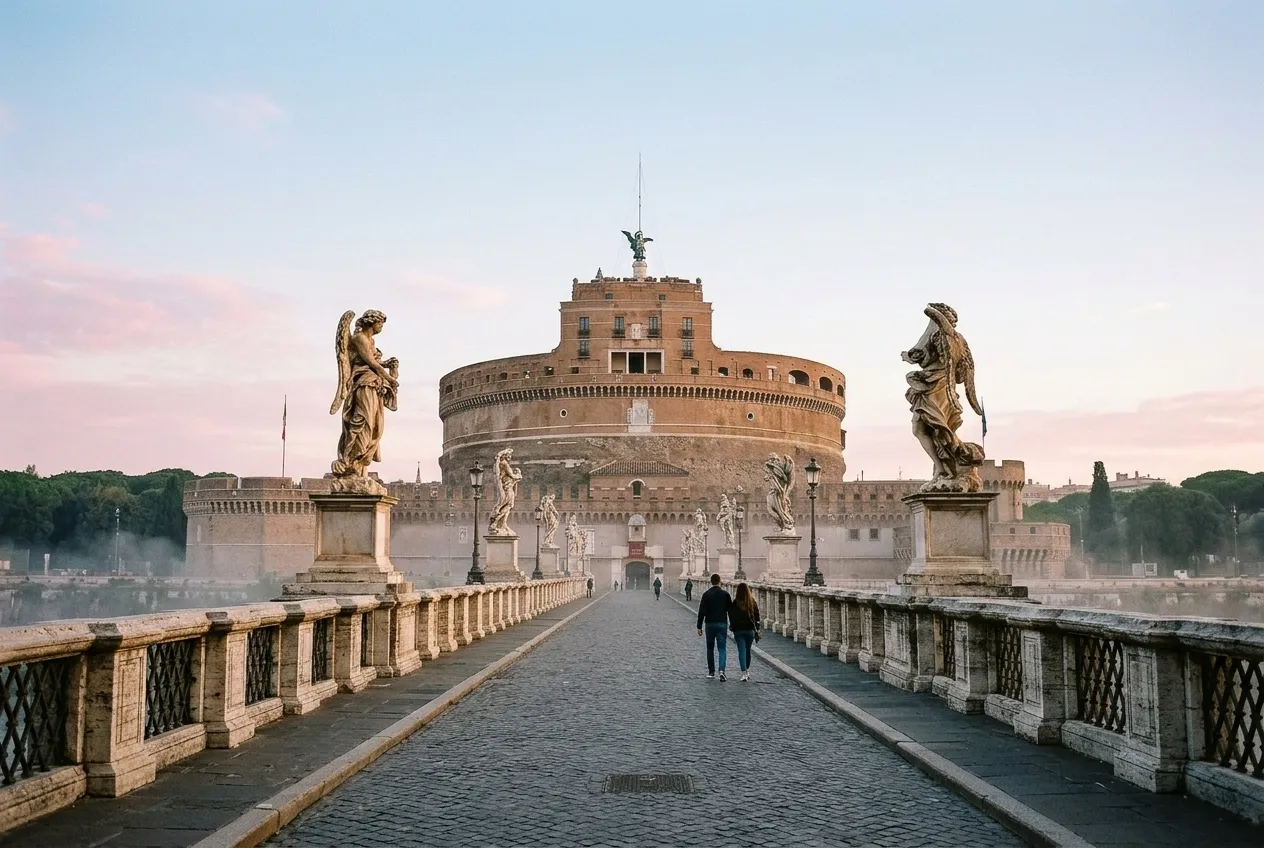
Nothing in Rome has changed jobs as often as this round building on the river. It has been a tomb, a fortress, a prison, a papal apartment, a treasury, a barracks and a museum. Its name comes from a vision, its shape from a dead emperor, and its most famous escape from a goldsmith with a bad temper.
The tomb
The emperor Hadrian began it around 130 as a mausoleum for himself and his family: a huge drum of stone on a square base, planted with cypresses and crowned by a statue of the emperor driving a chariot. He also built the bridge in front of it, in 134, so that Romans could cross the river to pay their respects. He died in 138 and was buried here the following year, and so were the emperors after him, down to Caracalla. By the 5th century the tomb was already a fort. When the Goths besieged Rome in 537 the defenders ran out of missiles and threw the statues down on them.
The angel
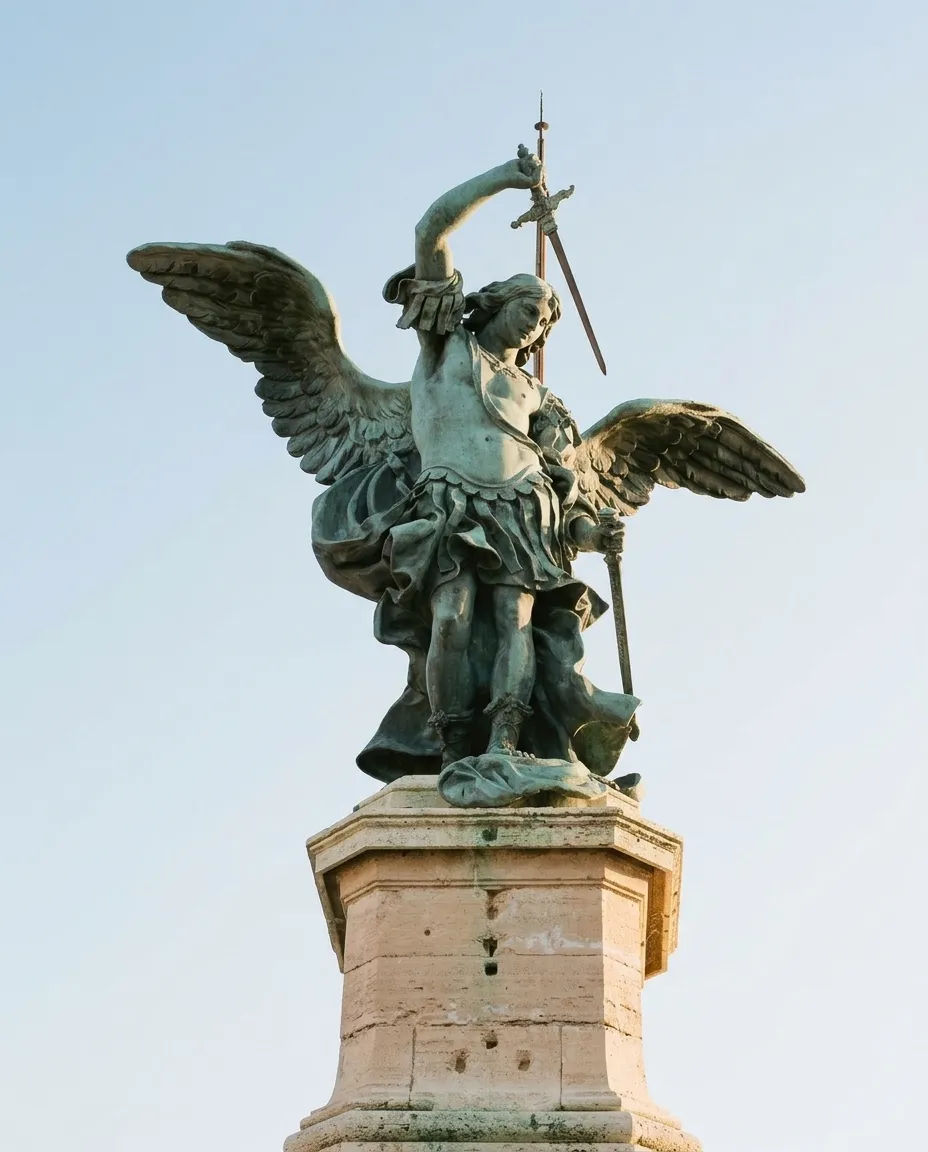
In 590 plague was killing Rome. Pope Gregory the Great led a procession through the city to pray for its end and, as it crossed the bridge, the story goes, he looked up and saw the archangel Michael standing on top of the tomb, sheathing his sword. The plague stopped. The building has been called the Castle of the Holy Angel ever since, and an angel has stood on top of it since the Middle Ages. The one you see today is bronze, by the Flemish sculptor Peter Anton von Verschaffelt, and dates from 1752. The marble one it replaced, carved by Raffaello da Montelupo in 1544, stands in a courtyard inside, slightly surprised to find itself at eye level.
The popes’ bolt-hole
In 1277 Pope Nicholas III had a covered passage built along the top of the old wall between the Vatican and the castle. It is 800 metres long and Romans call it the Passetto. In May 1527, when the troops of Charles V sacked Rome, Pope Clement VII ran its whole length with his cardinals holding up his robes, and then watched the city burn from the ramparts for seven months. Among the defenders on the walls that year was a Florentine goldsmith named Benvenuto Cellini, who later claimed that he had personally shot the commander of the attackers, the Constable of Bourbon.
Cellini’s escape
Eleven years later Cellini was back, this time as a prisoner, accused of stealing papal jewels during that same siege. He tells the story in his autobiography, and he tells it well. He worked the nails out of his cell door with pincers he had hidden, tied his bedsheets into a rope and let himself down the outer wall at night. The rope was too short. He jumped, broke his leg, dragged himself towards the city with the leg bound in a strip of cloth and was recaptured within days. He got out for good a year later, thanks to a cardinal, and went off to make the gold salt cellar that is now in Vienna.
The bridge of angels
The ten angels on Ponte Sant’Angelo each carry one of the instruments of the Passion: the crown of thorns, the nails, the lance, the sponge. Bernini designed them in 1667 for Pope Clement IX and his workshop carved them. The pope thought the two that Bernini had sculpted himself were too good to stand out in the rain and kept them; they are now in the church of Sant’Andrea delle Fratte. Puccini ended Tosca on these ramparts: the singer leaps from the top of the castle in the last bars of the opera.
Good to know
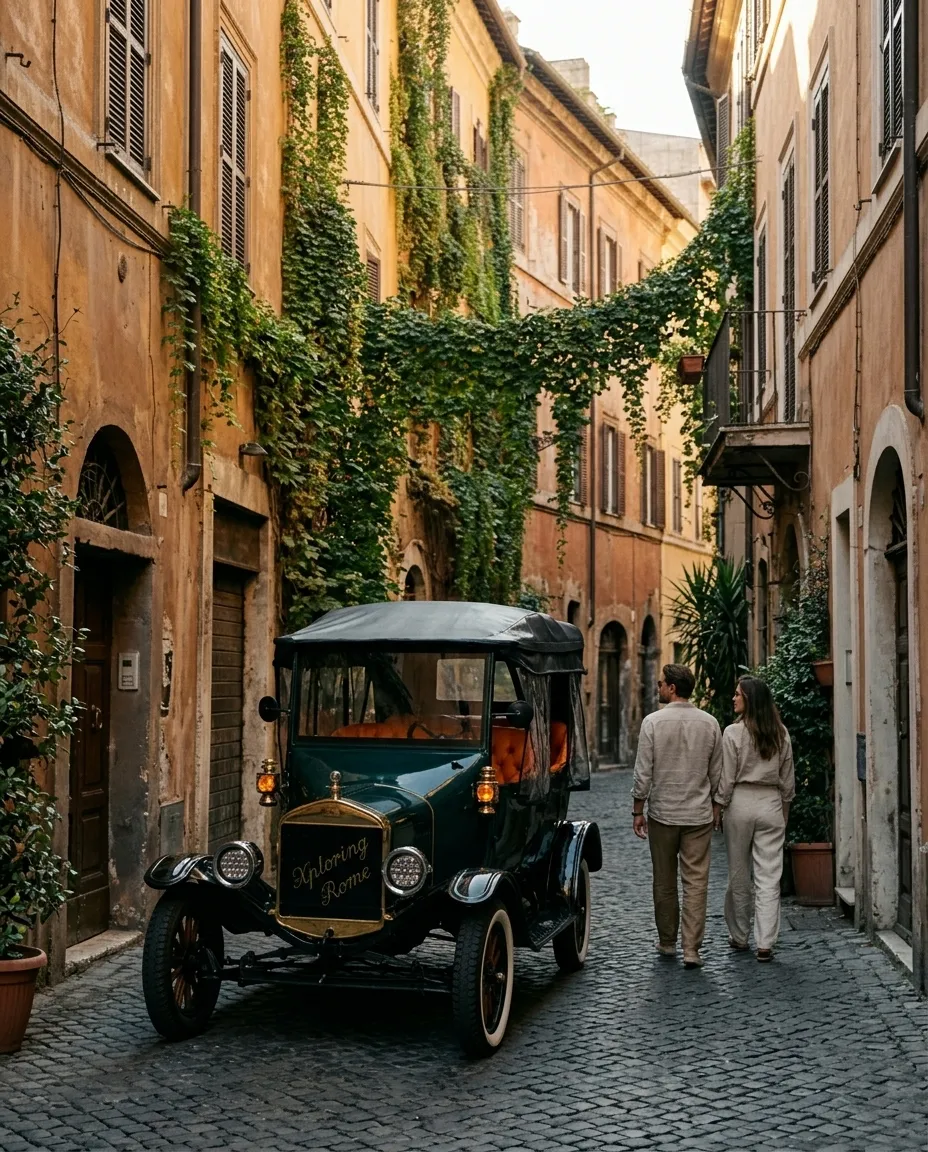
- Our Model T tour drives along the river past the castle; on the 19:00 departure it is lit up. The golf cart tour passes it on the way to St Peter’s Square.
- The castle is a museum: allow about 90 minutes, and go up to the terrace under the angel for one of the best views of the dome of St Peter’s.
- The bridge is pedestrian. The best photograph of the castle is from its middle, late in the afternoon.
See it from the cart
Drive past it with us
This place is on the route of these tours: a stop, a photo and the story told by your driver.