Places · 3 min read
Where Caesar really died: Largo di Torre Argentina and its cats
Caesar was not stabbed in the Forum. He died in a theatre hall that is now a sunken square full of cats, and was burned where Romans still leave flowers.
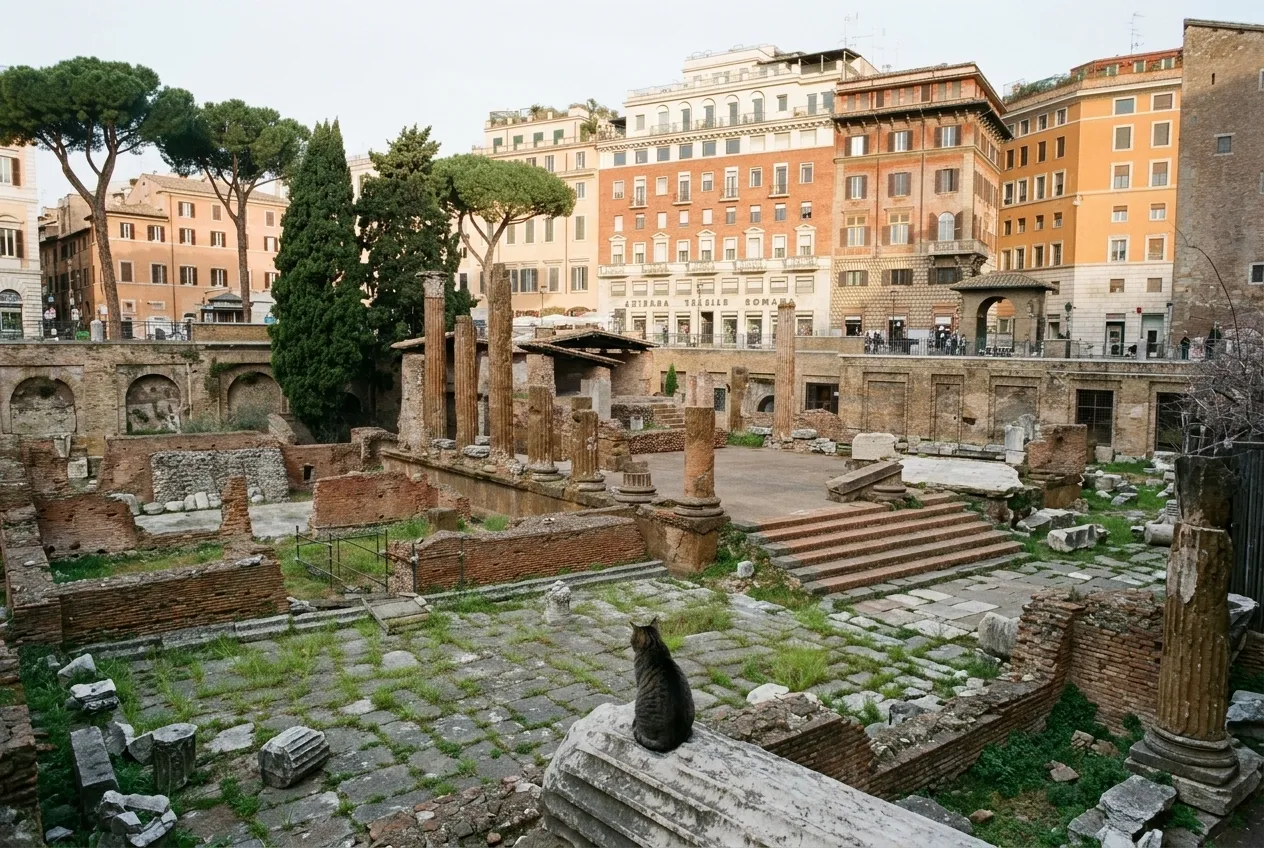
Ask most people where Julius Caesar was killed and they will say the Forum, on the steps of the Senate, with Brutus. Shakespeare put it there. Rome did not. On the Ides of March 44 BC the Senate was meeting somewhere else, and that somewhere is now a sunken square with a tram stop and a colony of cats.
A theatre, not a Senate house
The Senate house in the Forum was being rebuilt that year, so the senators met in a hall attached to the Theatre of Pompey, the first stone theatre in Rome, which stood where Campo de’ Fiori is today. The hall was the Curia of Pompey. Caesar arrived late, sat down and was surrounded by about sixty men with daggers under their togas. He was stabbed twenty-three times and fell at the foot of a statue of Pompey, his old rival. Brutus was among the knives; the “Et tu, Brute?” is Shakespeare’s.
Augustus later had the hall walled up and declared it a cursed place, and in time a public latrine was built against it. Rome has its own sense of humour.
Four temples and a tower
What you see from the pavement of Largo di Torre Argentina is the back of that complex. In 1926 a whole block of houses was pulled down to widen the streets, and under them appeared four temples of the Republic, older than Caesar, standing on a travertine platform four metres below the modern city. The round one, with its ring of column stumps, is the easiest to make out. The remains of the Curia of Pompey are behind the temples, on the west side: a wall of grey tufa blocks and the base where the statue stood. Since 2023 you can go down and walk among them on raised walkways.
The name has nothing to do with the country. Around 1500 Johannes Burckardt, the German master of ceremonies of the Borgia pope, built himself a palace with a tower here and named it after his home town, Strasbourg, whose Latin name was Argentoratum. The tower is gone; the name stayed.
The cats
The ruins have belonged to the cats since the excavations. Volunteers have run a shelter among the temples since the 1990s, at the corner of Via Florida; the animals are sterilised, fed and, if someone wants them, adopted. On a sunny morning you will count twenty or thirty asleep on the column bases, which is roughly what the senators were doing when Caesar walked in.
The flowers in the Forum
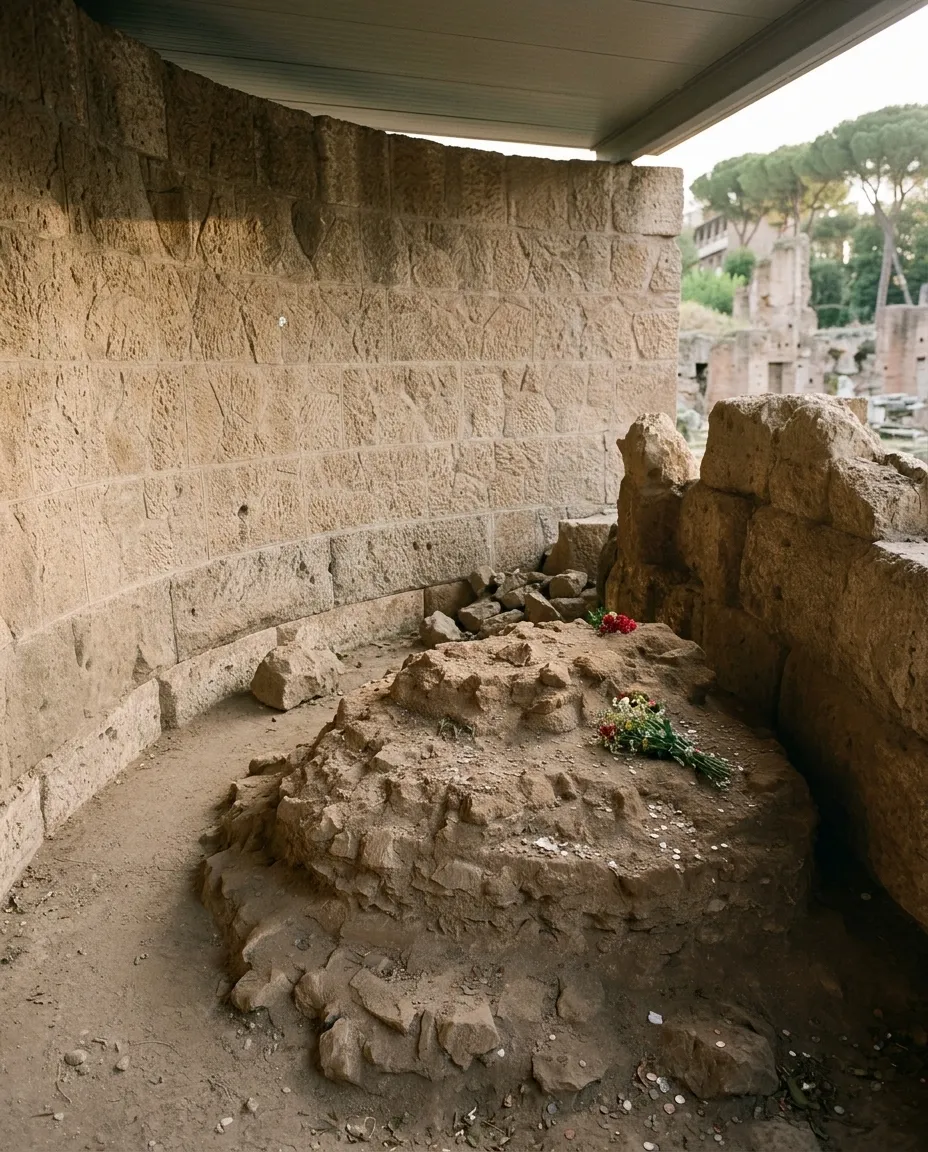
Caesar’s body was carried to the Forum and burned on an improvised pyre in front of the crowd, after Mark Antony’s speech had turned the mood from shock to fury. Soon afterwards an altar was raised on the spot, and Augustus built the Temple of the Divine Julius over it. All that is left is a low mound of concrete under a small roof, in front of the Temple of Castor and Pollux. Every day someone leaves flowers on it. On 15 March there are heaps.
Good to know
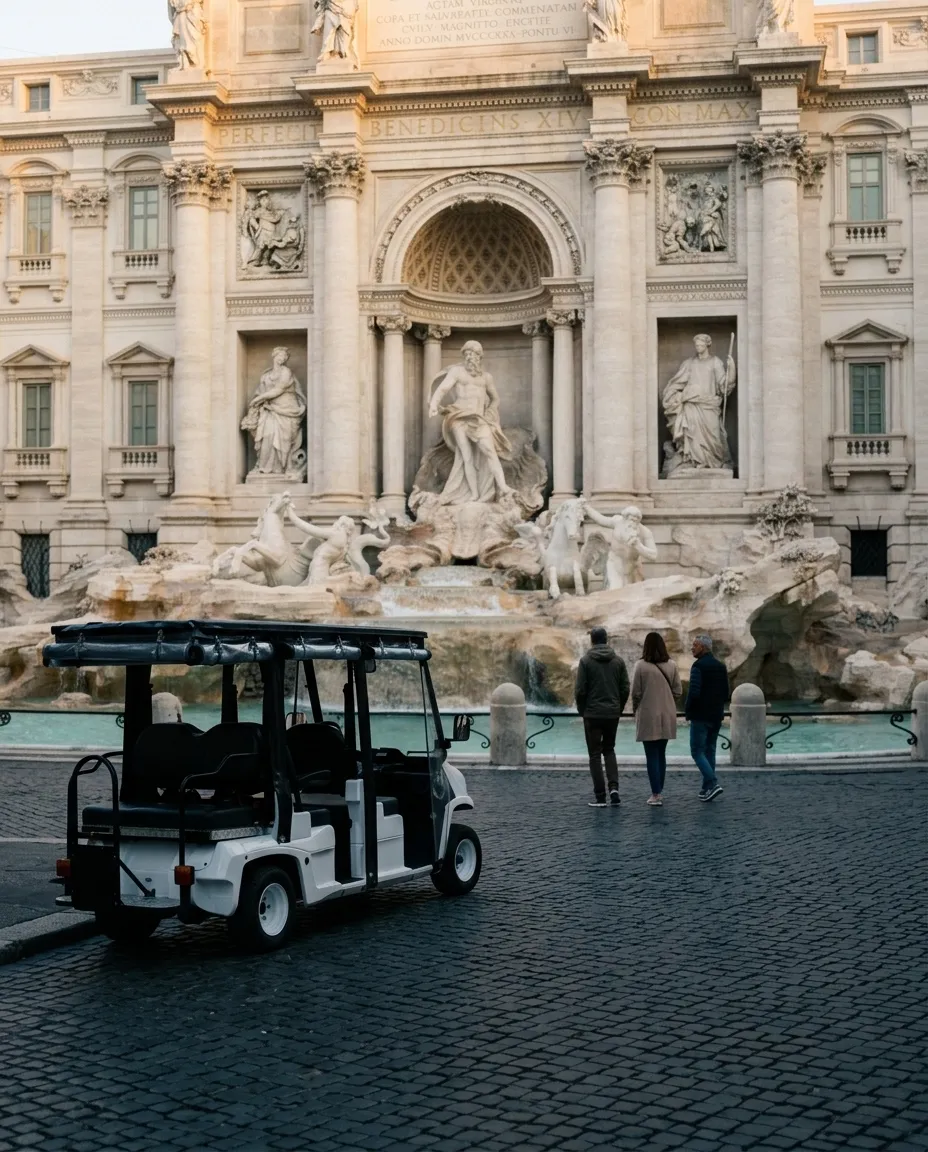
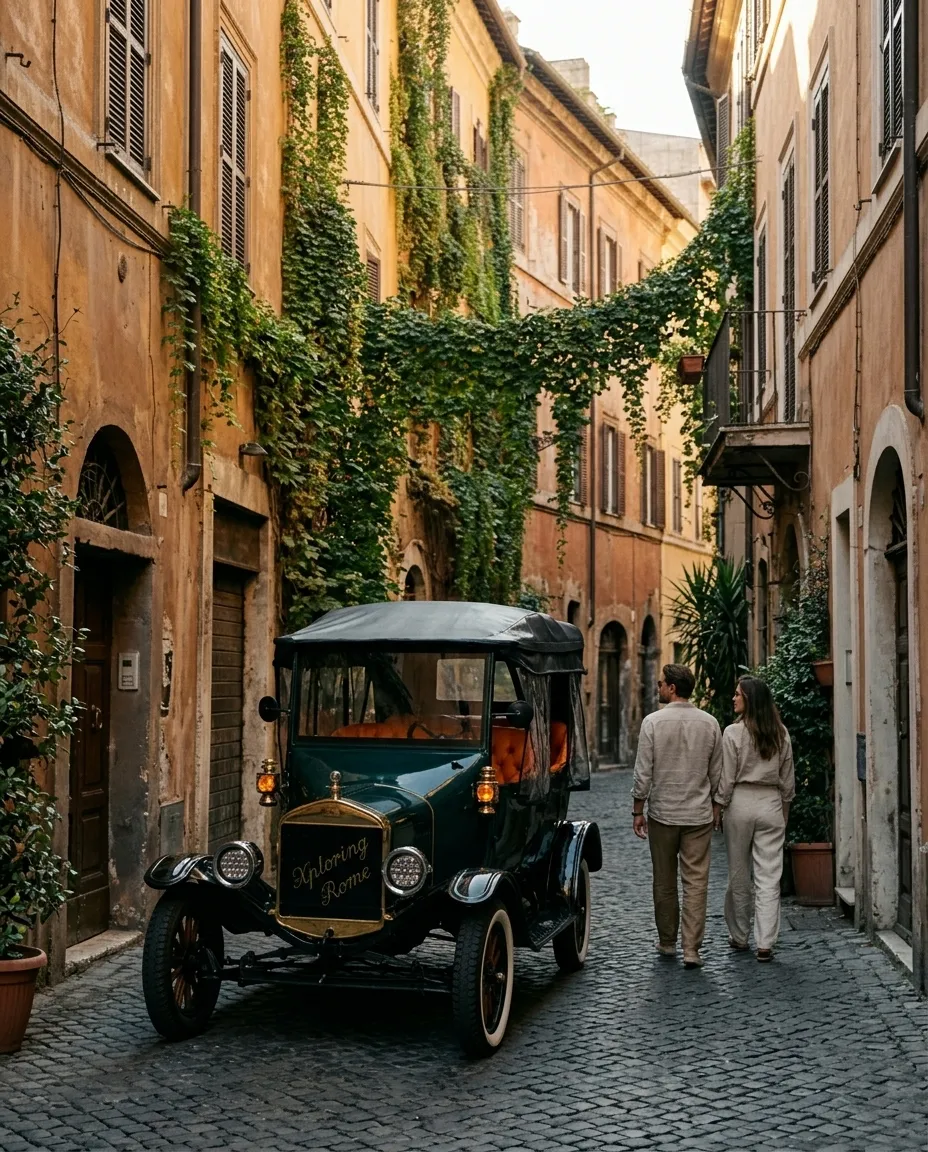
- Largo di Torre Argentina is a crossroads of the historic centre; both our golf cart tour and our Model T tour drive past it, and from the cart you look straight down into the temples.
- Going down to the walkways among the ruins is ticketed; the view from the pavement is free and almost as good.
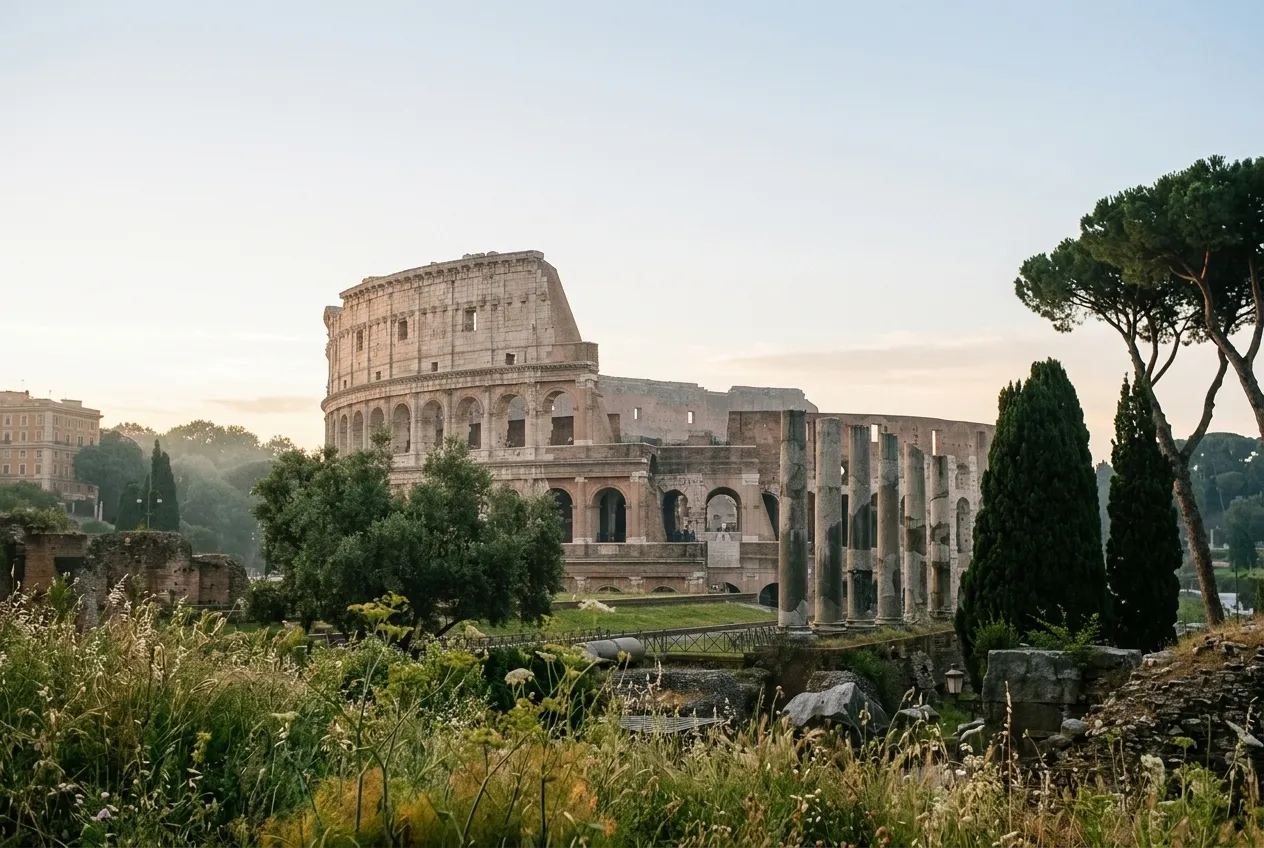
- Caesar’s altar is inside the Roman Forum, which needs a ticket. Our tours see the Forum from Via dei Fori Imperiali, where you can make out the three columns of the Temple of Castor and the Palatine behind them.
See it from the cart
Drive past it with us
This place is on the route of these tours: a stop, a photo and the story told by your driver.