Places · 3 min read
The Pantheon: Agrippa's name on Hadrian's building
The inscription says Agrippa built it. The bricks say Hadrian. Why the Pantheon still stands, what the rain does inside and the pearl that hung on its Venus.
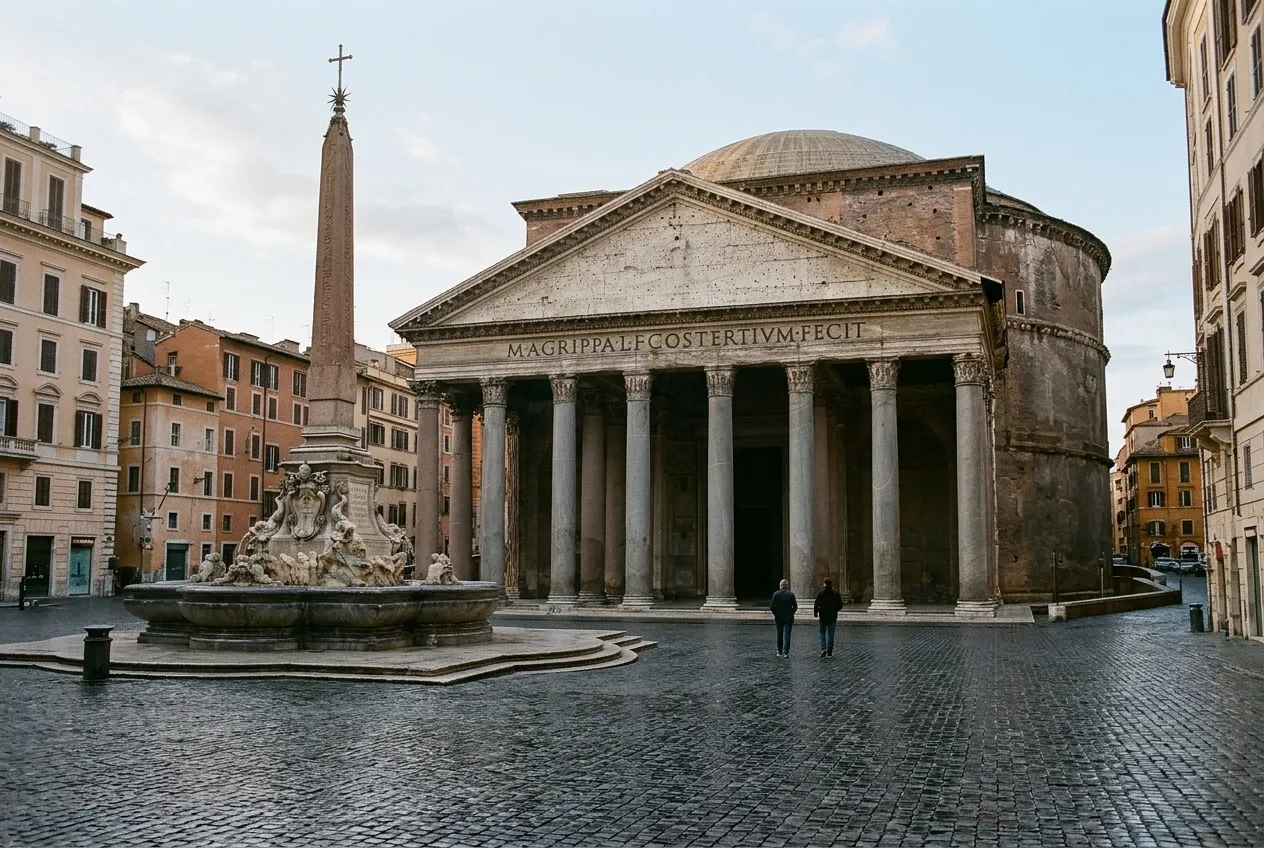
Stand in the piazza and read the inscription on the pediment: M·AGRIPPA·L·F·COS·TERTIVM·FECIT. “Marcus Agrippa, son of Lucius, consul for the third time, built this.” It is one of the most famous lines in Rome, and it is not true. Or rather, it was true once, about a different building.
The bricks tell on him
Agrippa, the right-hand man of Augustus, did build a Pantheon here around 25 BC. It burned in the great fire of 80 AD, was rebuilt, and burned again after a lightning strike. What you see today was built from scratch under the emperor Hadrian, between about 118 and 125.
How do we know? In 1892 a French architect, Georges Chedanne, studied the brick stamps. Roman brickmakers stamped their bricks with the names of the consuls of the year, and every stamp in the Pantheon points to the 120s. Hadrian had a habit the Romans found odd: he almost never put his own name on the buildings he paid for. So he put back the name of the man who had built the first one. Some historians think he designed the dome himself; he was a passionate amateur architect, and this is the building where the passion looks most convincing.
The dome
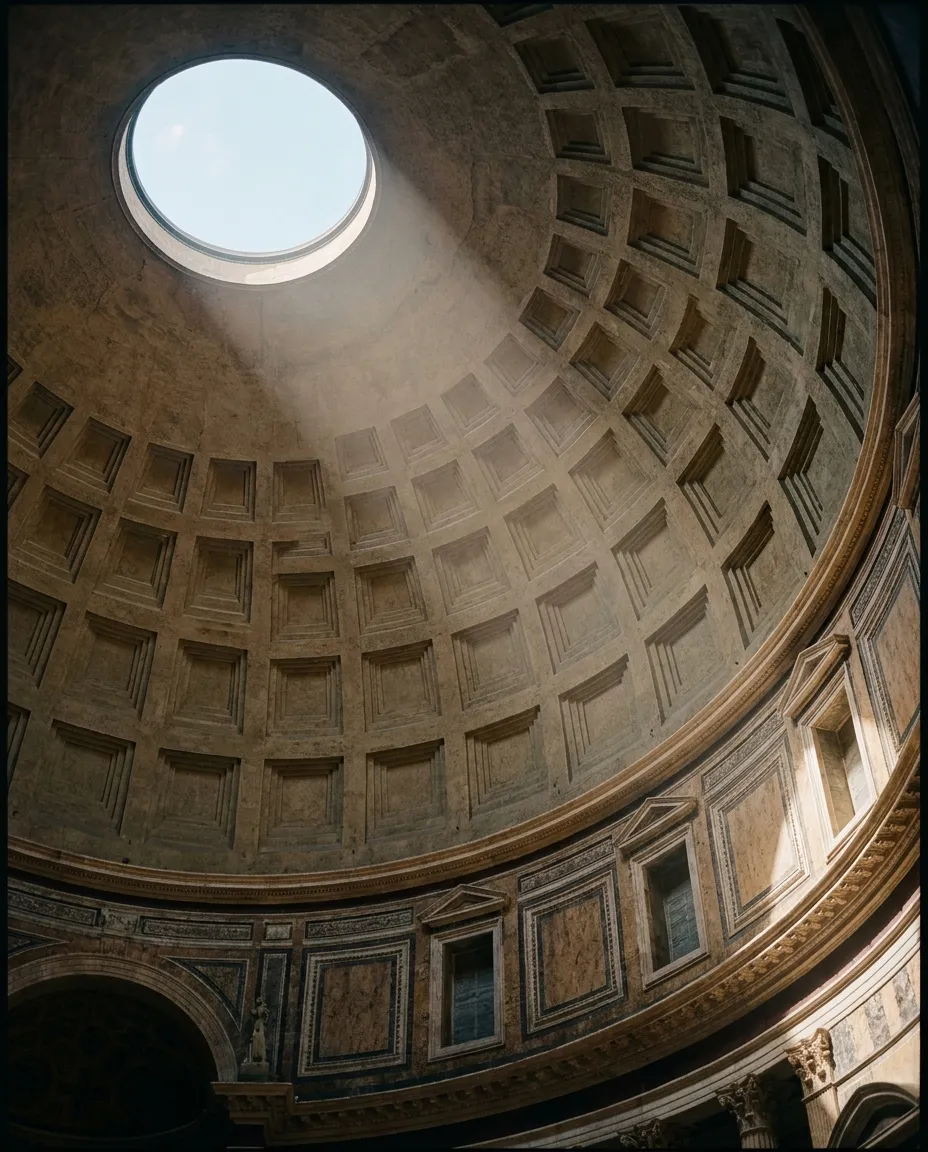
The dome is 43.3 metres across and exactly as high as it is wide: a perfect sphere would fit inside. Nineteen centuries later it is still the largest unreinforced concrete dome in the world. The Romans made it lighter as it rose, mixing pumice into the concrete near the top and hollowing out the five rings of coffers. The hole at the top, the oculus, is about nine metres wide and open to the sky. Yes, the rain comes in. The floor is slightly convex and has small drain holes, so the water runs off as it did in Hadrian’s time. On Pentecost Sunday firefighters climb onto the roof and drop thousands of red rose petals through the hole.
Why it is still here
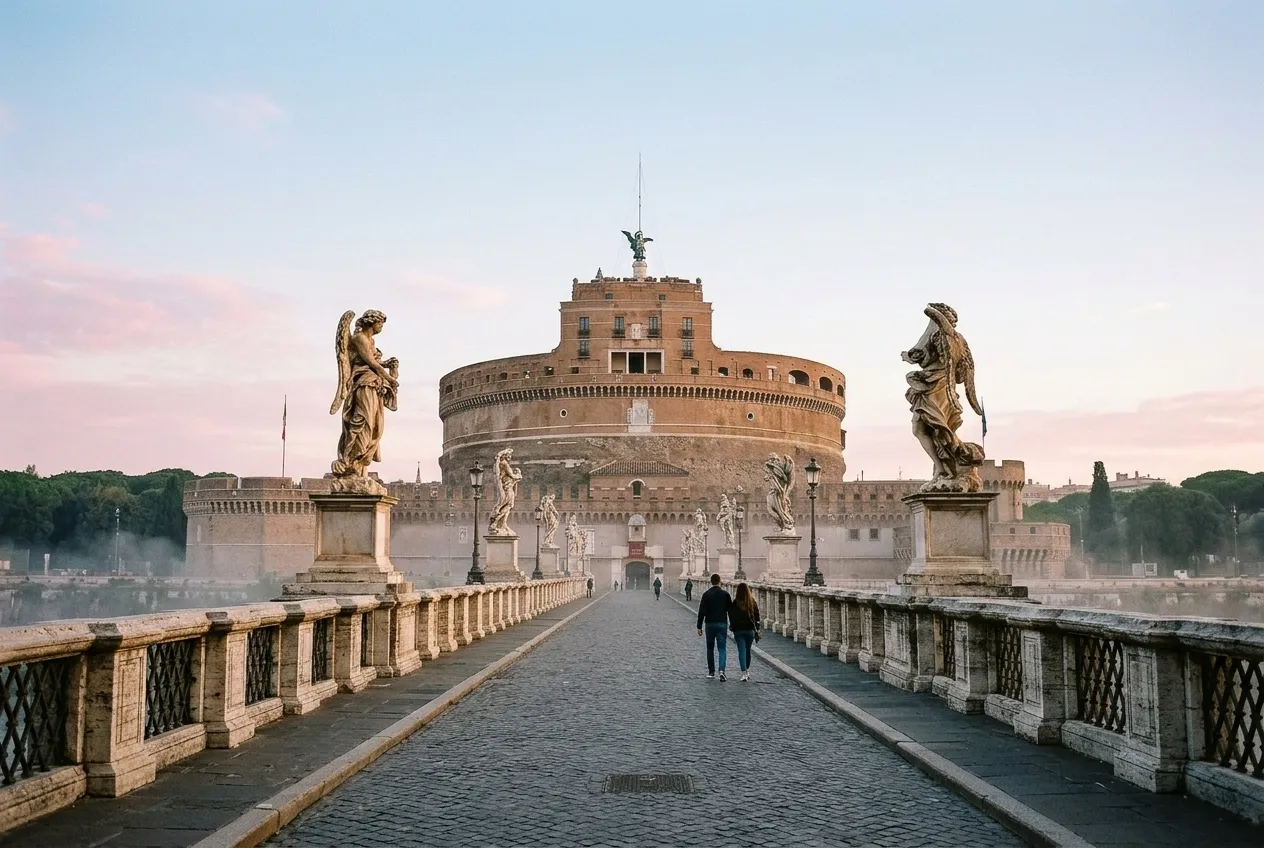
Most Roman temples were quarried for their stone. This one was handed to the pope in 608 by the Byzantine emperor Phocas, who had little else to give, and consecrated as the church of Santa Maria ad Martyres. Churches were not demolished. That is the whole secret. The bronze fared less well: in the 1620s Pope Urban VIII Barberini had the bronze beams of the portico ceiling melted down for cannons at Castel Sant’Angelo, and Romans answered with one of the city’s best lines: what the barbarians did not do, the Barberini did.
Three things to look for
- The holes in the columns. For centuries the portico was crammed with stalls selling poultry, and the stallholders drove the poles of their awnings straight into the granite. The holes are still there, at about head height. The stalls were cleared in the 15th century; the fish market stayed in the piazza until 1847.
- Raphael’s tomb. The painter asked to be buried here and was, in 1520, aged 37. His epitaph, by Cardinal Bembo, says that while he lived Nature feared to be outdone, and when he died she feared to die with him.
- Cleopatra’s pearl. Pliny the Elder writes that Cleopatra once dissolved one of her two enormous pearls in vinegar and drank it, to win a bet with Mark Antony. The surviving pearl was later cut in two and hung from the ears of the statue of Venus in Agrippa’s Pantheon. The statue is gone. The story alone is worth the ticket.
Good to know
- Since 2023 there is a paid ticket to go inside (€5 when we last checked, free for under-18s). The outside is free, and the piazza is at its best before 9 in the morning.
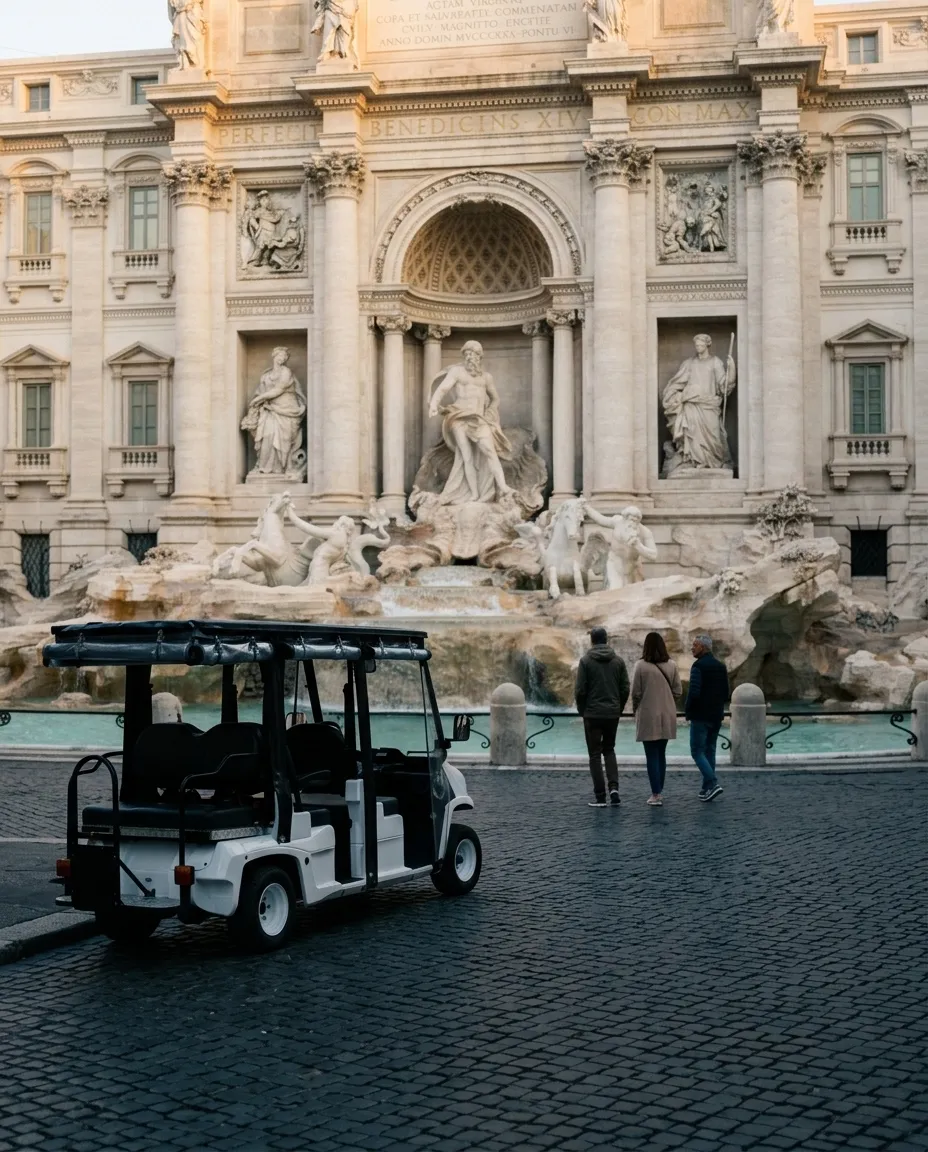
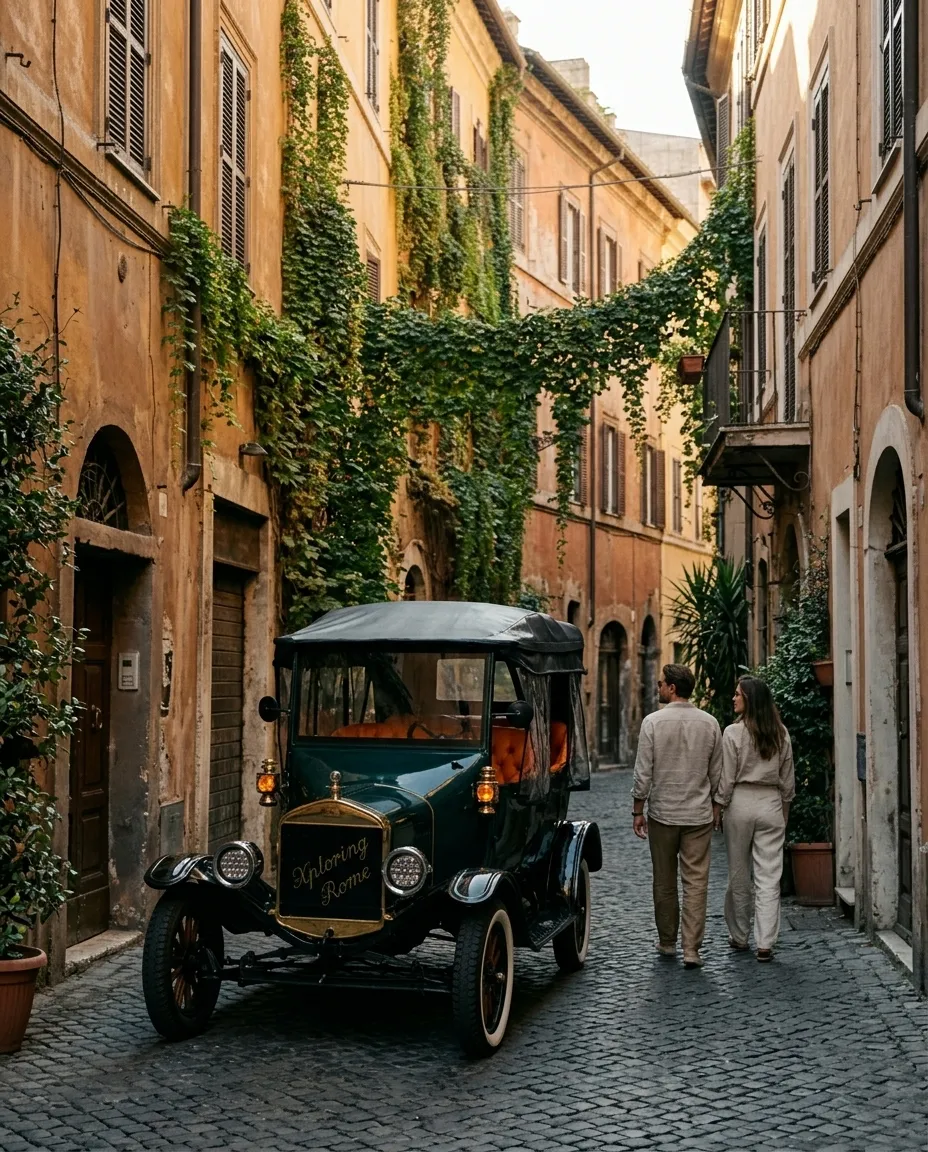
- Our golf cart tour stops outside the Pantheon; the Model T tour drives past it. Going in is a 20-minute visit you can add before or after the tour.
- Behind the Pantheon, in Piazza della Minerva, Bernini’s small elephant carries an obelisk on its back. Romans call it il Pulcino, the chick.
See it from the cart
Drive past it with us
This place is on the route of these tours: a stop, a photo and the story told by your driver.