Places · 3 min read
The Aventine keyhole, the orange garden and the quietest hill in Rome
A dome seen through a keyhole, a garden of bitter oranges, a church door from the year 430 and the fresco that started Santa Claus. The Aventine in one morning.
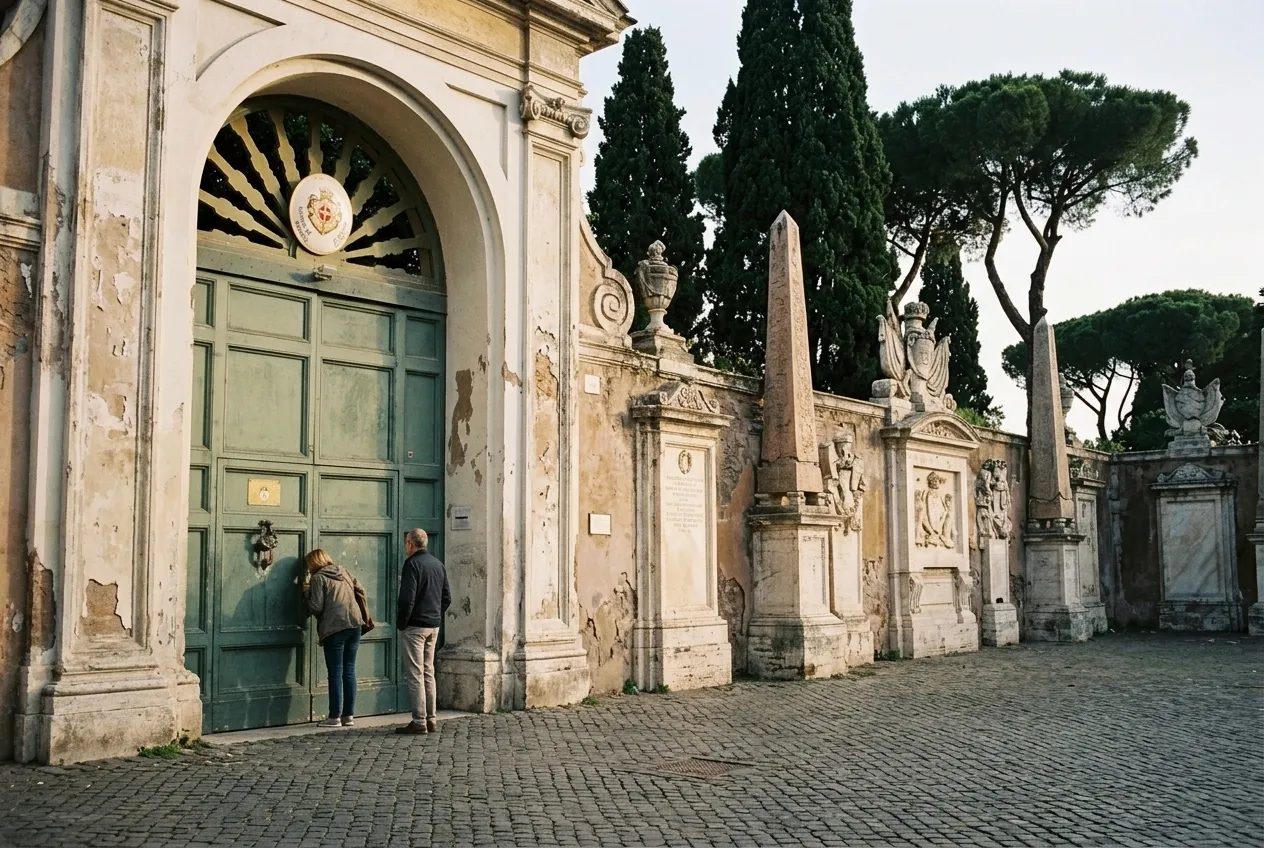
Ten minutes from the Colosseum there is a hill where the loudest sound is a church bell. The Aventine has no shops, almost no cafés and the best-kept secret in Rome, which everyone knows about: a view of St Peter’s through a keyhole.
The keyhole
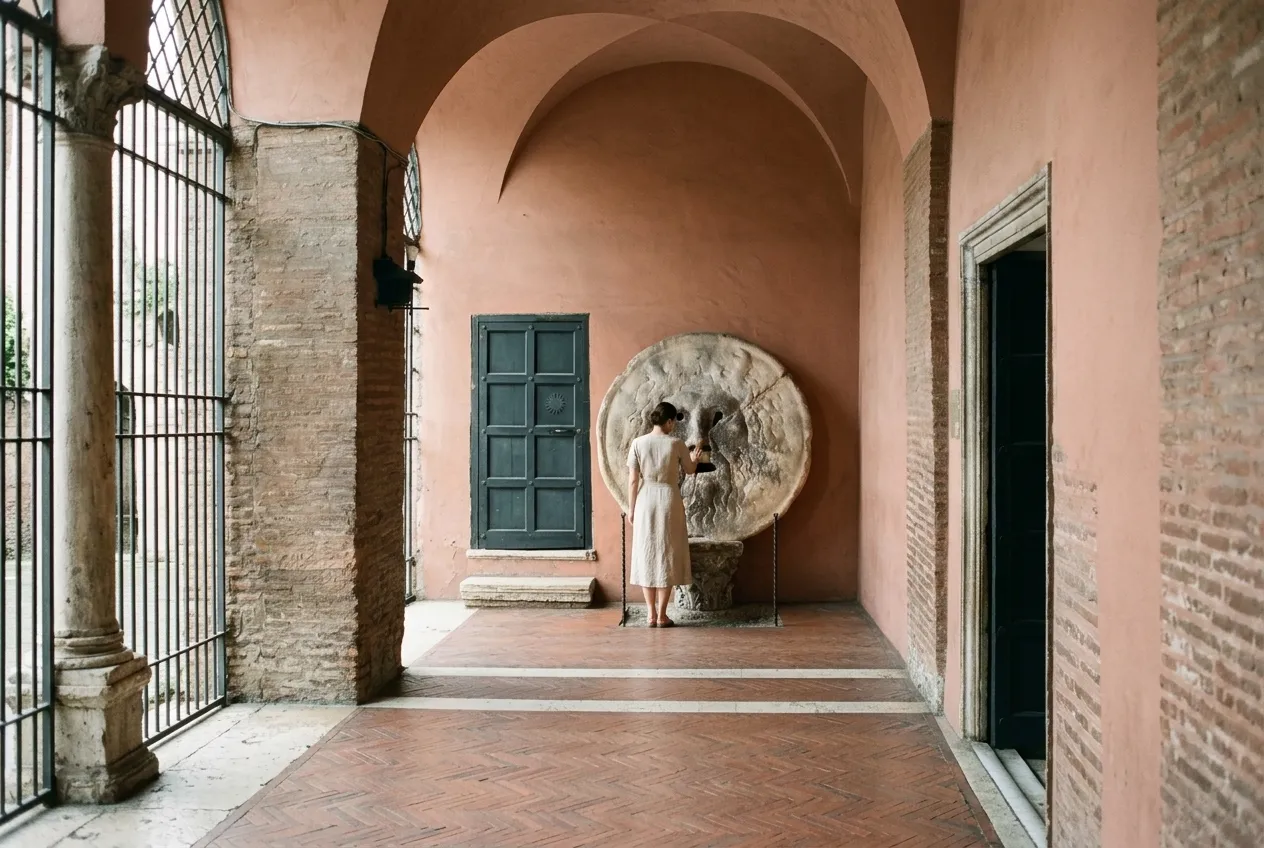
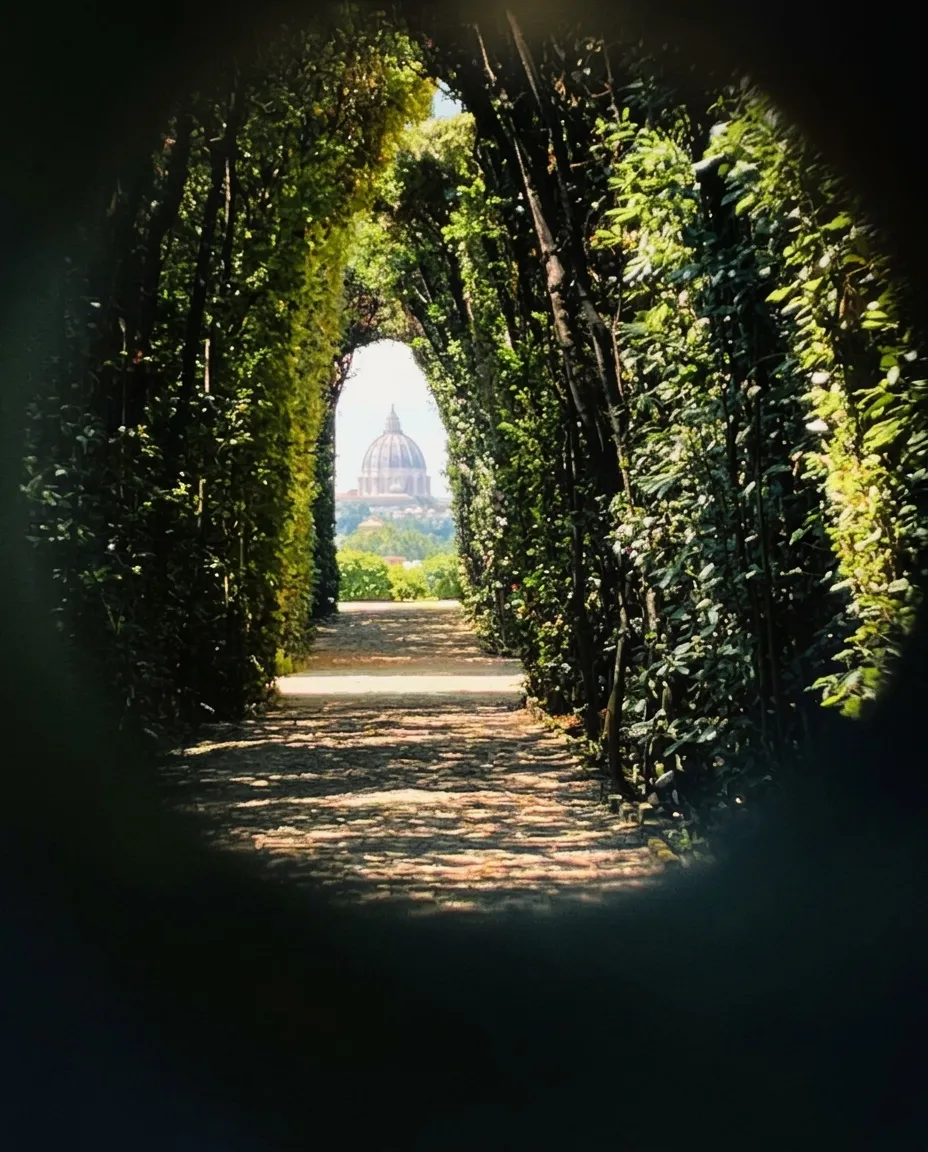
At the top of the hill, in Piazza dei Cavalieri di Malta, stands a pale green door in a wall decorated with obelisks and trophies. It is the entrance to the Priory of the Knights of Malta, the medieval order that still exists and still owns the place. Bend down, close one eye and look through the keyhole: a long tunnel of clipped bay hedges leads the eye straight to the dome of St Peter’s, perfectly framed, a kilometre and a half away.
The square, the wall and the little church behind the door were designed in 1765 by Giovanni Battista Piranesi, the great engraver of Roman ruins, and they are the only buildings he ever made. Whether he planned the view or the gardeners found it later is still argued about. Romans like to say that through this hole you see three states at once: the garden of the Order of Malta, the city of Rome and the Vatican.
The orange garden
A hundred metres down the road is the Giardino degli Aranci, the Orange Garden, a small square park of bitter orange trees laid out in 1932 on the site of the Savelli family fortress. Its terrace hangs over the river and looks across to the domes of the centre and the Janiculum beyond. At sunset half of Rome’s engaged couples are up here. The oranges recall a tree that St Dominic is said to have planted next door at Santa Sabina in 1220, from a cutting brought from Spain; the friars will tell you its descendant still grows in their cloister, and you can see it through a small round window in the church porch.
The door from the year 430
Santa Sabina, next to the garden, is the most complete early Christian basilica in Rome: a long hall of white Corinthian columns and clear light, built in the 420s and stripped back to that state in the 20th century. Its treasure is the wooden door under the portico, carved around 430 from cypress: eighteen panels of Bible scenes survive, and one of them, top left, is among the oldest images of the Crucifixion in existence, made at a time when Christians still hesitated to show it.
Santa Claus was here
Further down the hill, in the small church of San Saba, a faded fresco shows a bishop dropping a bag of gold through the window of a house where three young women are in bed. The bishop is St Nicholas of Myra, the women are three sisters whose father could not afford their dowries, and the secret gift through the window, repeated three nights running, is the story that became Santa Claus. The fresco is from the 13th century; the stocking by the fireplace came later.
Why it is so quiet
The Aventine was the hill of the plebs: in 494 BC the common people of Rome walked out of the city and camped here until the patricians gave them their own tribunes. Two and a half thousand years later “retiring to the Aventine” still means a political walkout in Italian. Today it is a hill of convents, embassies and gardens, with almost no through traffic, which is why our drivers like it so much.
Good to know
- The Aventine is one of the stops of our golf cart tour: the keyhole and the Orange Garden are a short walk from where the cart stops.
- The line for the keyhole is usually five to fifteen minutes; it is longest at sunset.
- Santa Sabina is open and free; the Orange Garden closes at dusk. In May and June the Rose Garden on the slope towards the Circus Maximus is open as well: 1,100 varieties on a hillside that used to be a Jewish cemetery.
See it from the cart
Drive past it with us
This place is on the route of these tours: a stop, a photo and the story told by your driver.