Stories & legends · 3 min read
The Barberini bees and the curse of the twenty-second year
A small fountain at the foot of Via Veneto, an inscription that counted one year too many, and a pope who died eight days short. The Barberini bees, explained.
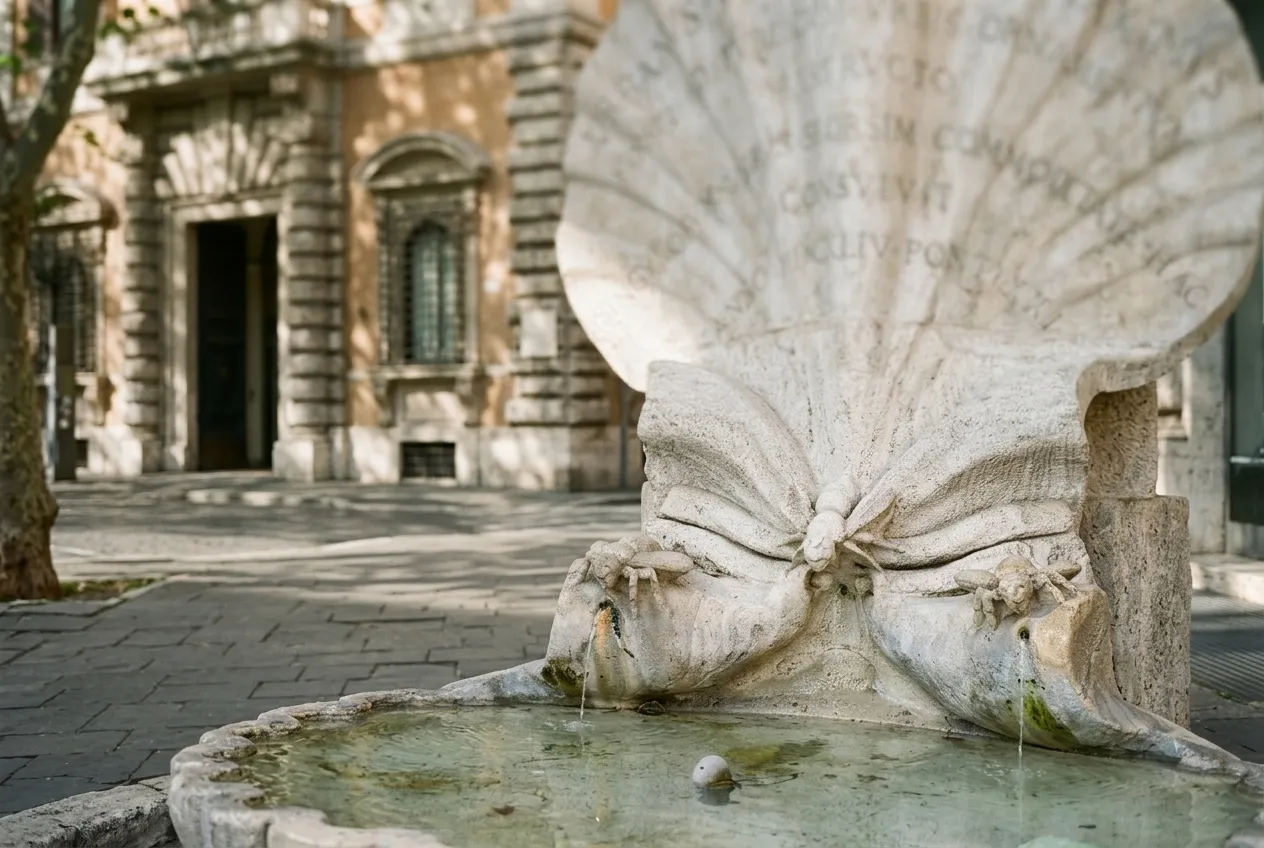
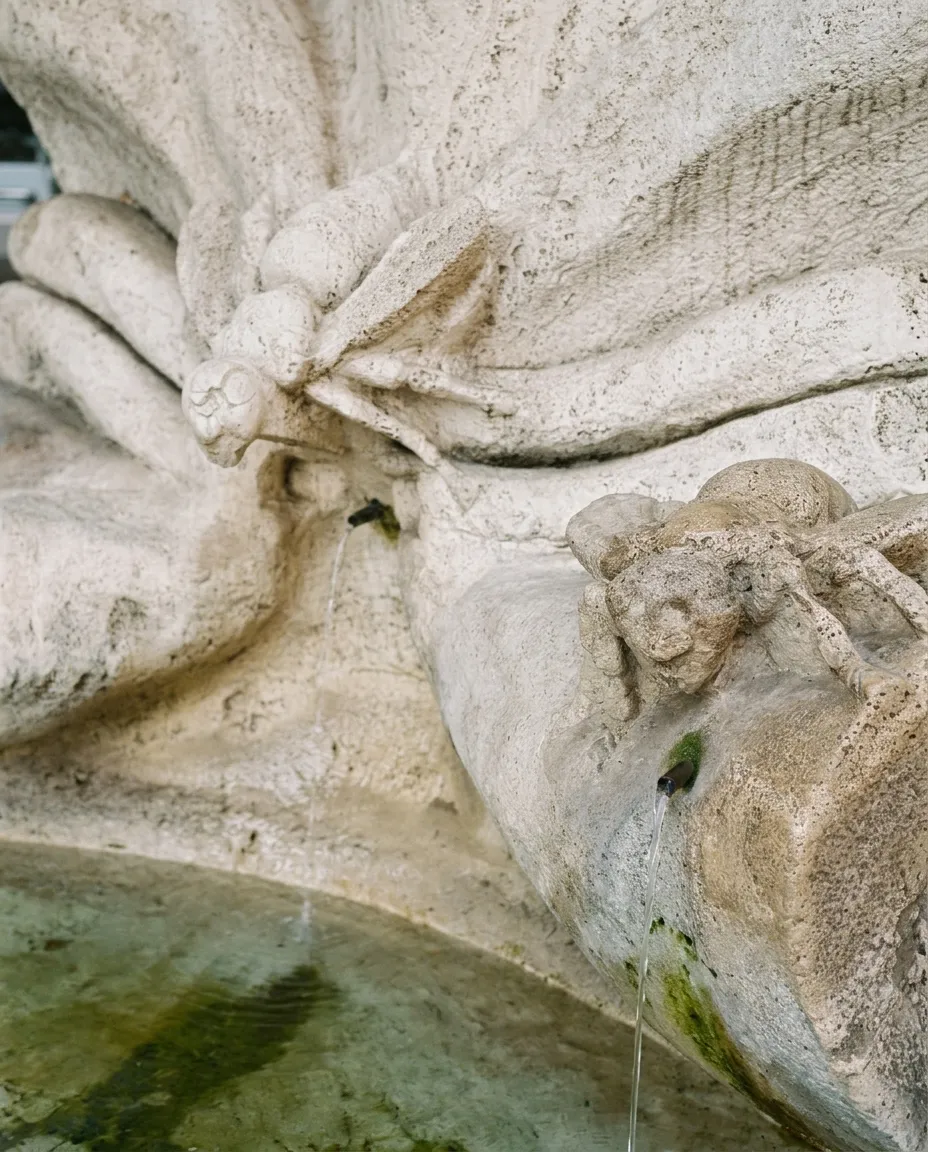
At the bottom of Via Veneto, where it opens onto Piazza Barberini, there is a fountain most people walk past: an open travertine shell with three bees drinking from it. Bernini made it in 1644 as a drinking trough for horses, the last gift of a pope who had given Rome a great deal and taken a fair amount too. The bees are the key to the story.
Bees everywhere
Look up almost anywhere in Rome and you will find three bees: on the Baldacchino in St Peter’s, on the Triton fountain in the middle of this piazza, on palace doors, church façades and fountains. They are the coat of arms of the Barberini, the family of Maffeo Barberini, who reigned as Urban VIII from 1623 to 1644. (The family had started out with horseflies on its shield; bees sounded better.) Urban was the pope of Bernini, of the Baldacchino, of the Triton and of the trial of Galileo. He also stripped the bronze from the portico of the Pantheon for cannons, which earned the family the sharpest joke in Rome: what the barbarians did not do, the Barberini did.
The inscription
The Fountain of the Bees carries a Latin inscription. In its first version it said that the fountain had been built in the twenty-second year of Urban’s pontificate. Romans counted on their fingers: the pope had been elected in August 1623, so in the spring of 1644 he was in his twenty-first year. The inscription was flattering him with a year he had not yet lived. Romans said the Barberini, having helped themselves to everything else in the city, were now helping themselves to time.
The number was quietly corrected to XXI. It made no difference. Urban VIII died on 29 July 1644, eight days before the anniversary that would have opened his twenty-second year. Rome, which had been waiting, celebrated in the streets.
The fountain that moved
If the fountain looks a little out of place, it is. It originally stood at the corner of Via Sistina, facing the piazza, and was taken apart in 1880 when the traffic needed the space. The pieces sat in a storeroom for 35 years and were put back together in 1915 on the corner of Via Veneto, where you see them now, with a few new parts to replace the ones that had gone missing.
Around the piazza
- The Triton. In the middle of the square Bernini’s merman kneels on a shell held up by four dolphins and blows a jet of water from a conch. It was finished in 1643, one year before the bees, and the bees are on it too.
- Palazzo Barberini. Up the slope, the family palace built by Maderno, Borromini and Bernini now houses the National Gallery of Ancient Art: Caravaggio’s Judith, Raphael’s Fornarina and a ceiling by Pietro da Cortona on which the bees fly up to heaven.
- Via Veneto. The street of La Dolce Vita climbs from the fountain to the city walls. The paparazzi are gone; the plane trees and the cafés are still there.
Good to know
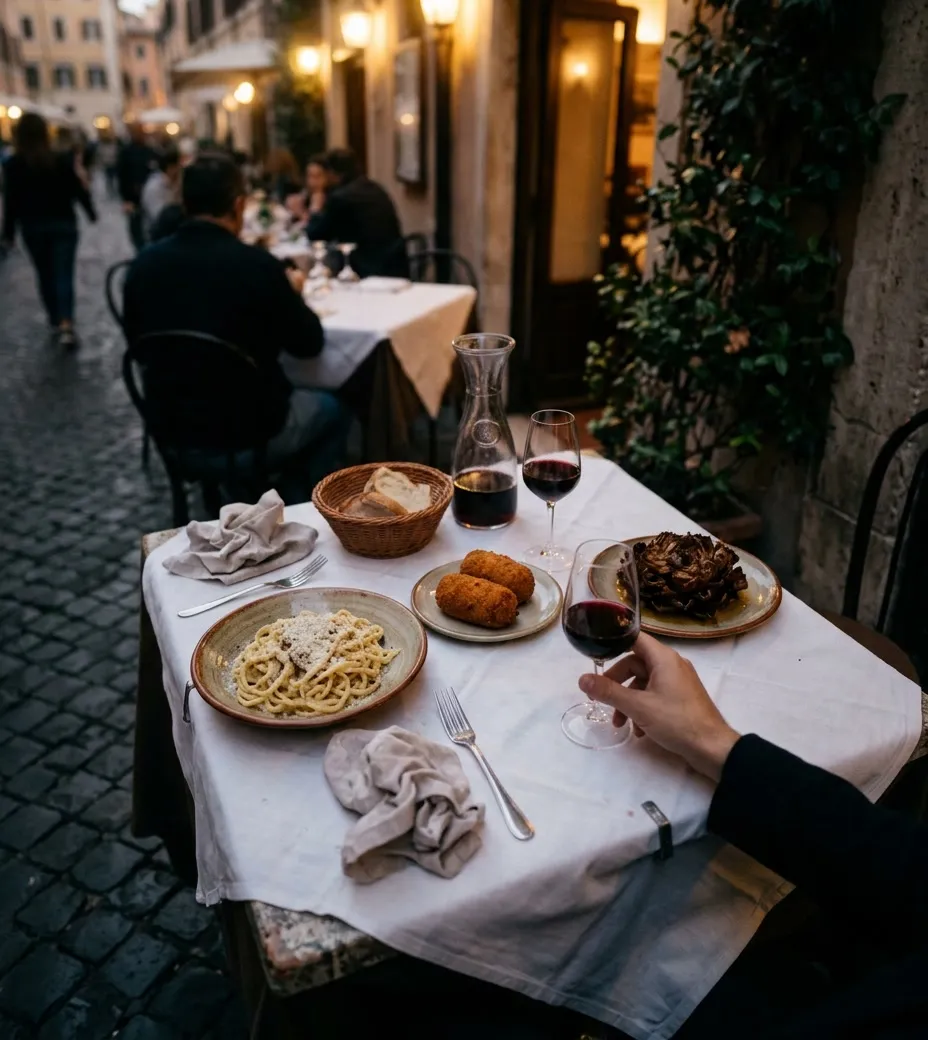
- Piazza Barberini is the meeting point of our food & wine tour: the fountain is thirty steps from where the golf cart waits.
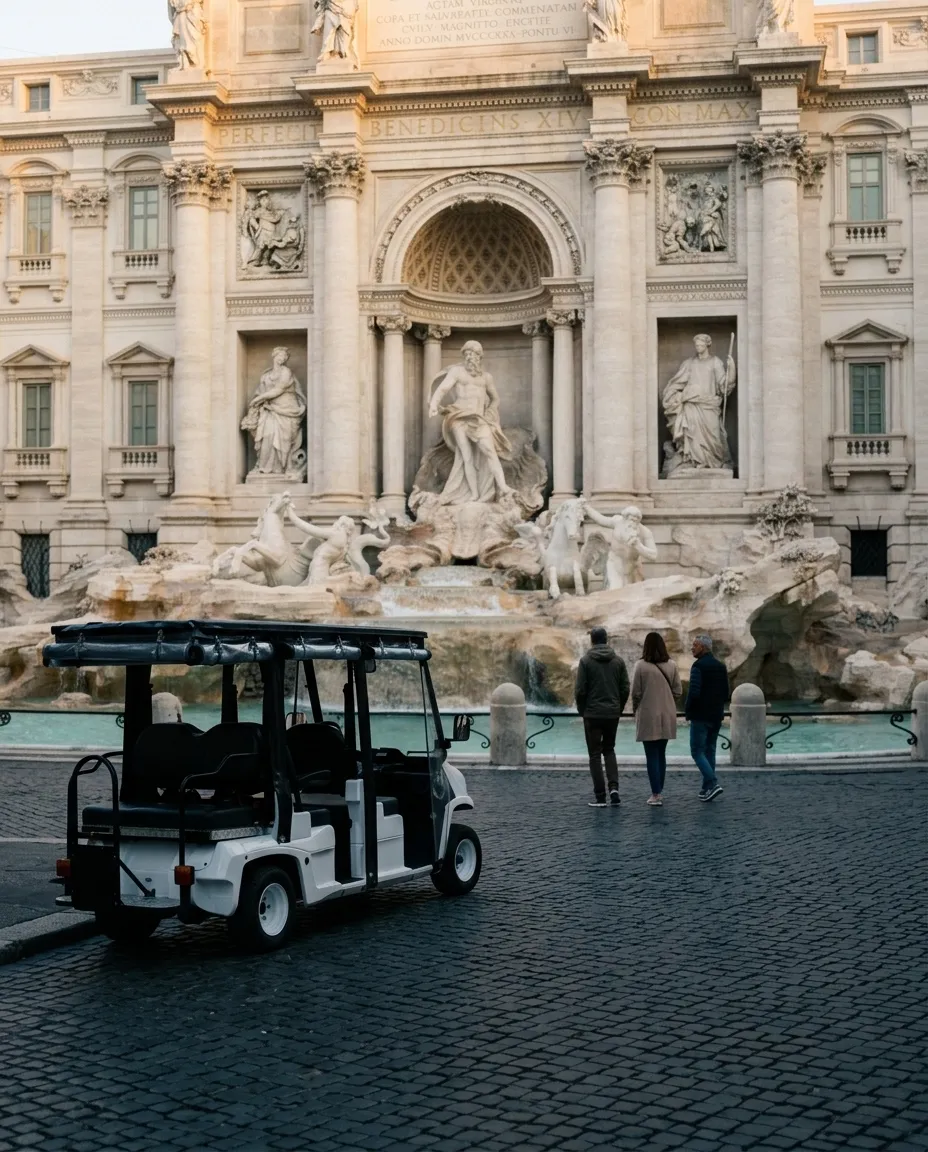
- The piazza is a few minutes from the Trevi Fountain and the Spanish Steps, two stops of our golf cart tour.
- The Barberini metro station (line A) opens onto the square.
See it from the cart
Drive past it with us
This place is on the route of these tours: a stop, a photo and the story told by your driver.