Stories & legends · 3 min read
Bernini against Borromini in Piazza Navona: a feud that never happened
The statue that shields itself from the church, the stadium under the pavement and the summers when the whole piazza was flooded. Navona's three stories.
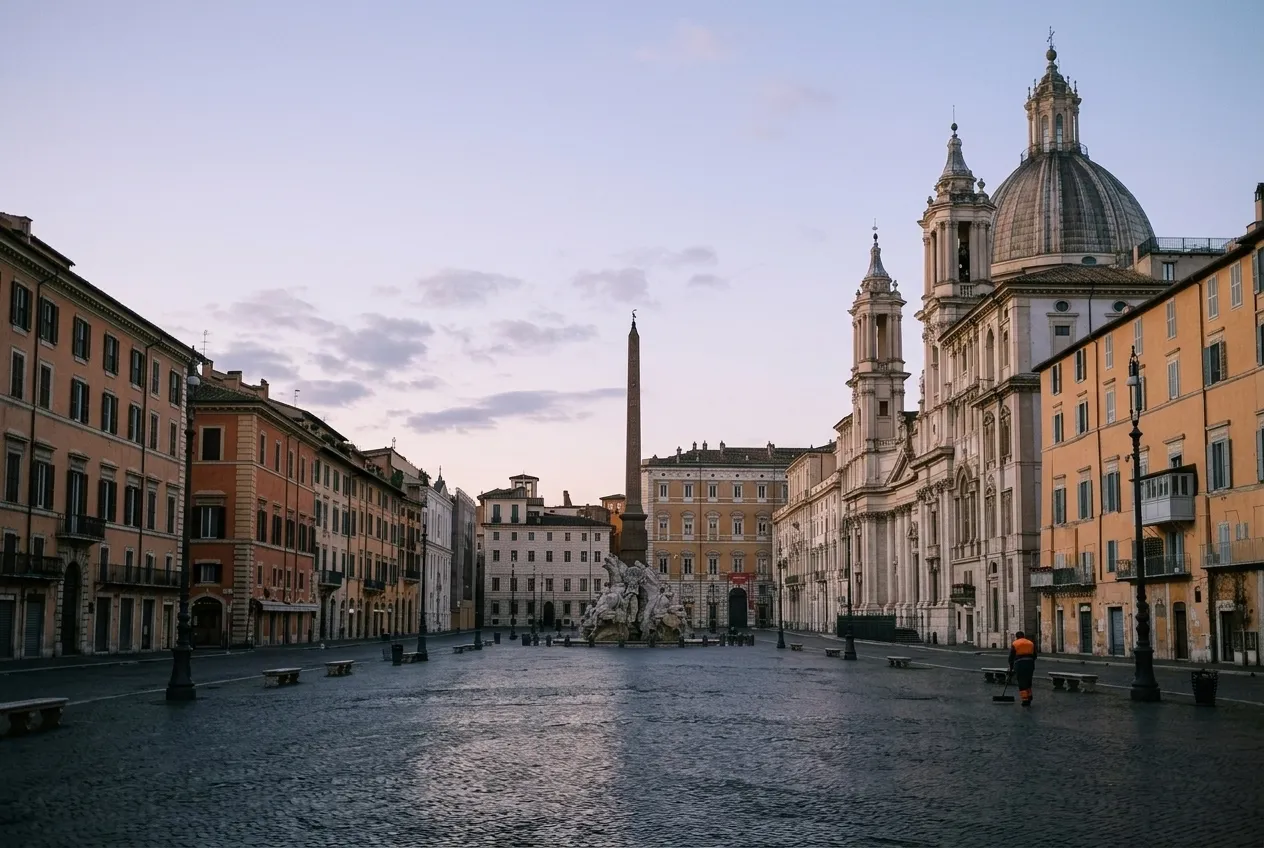
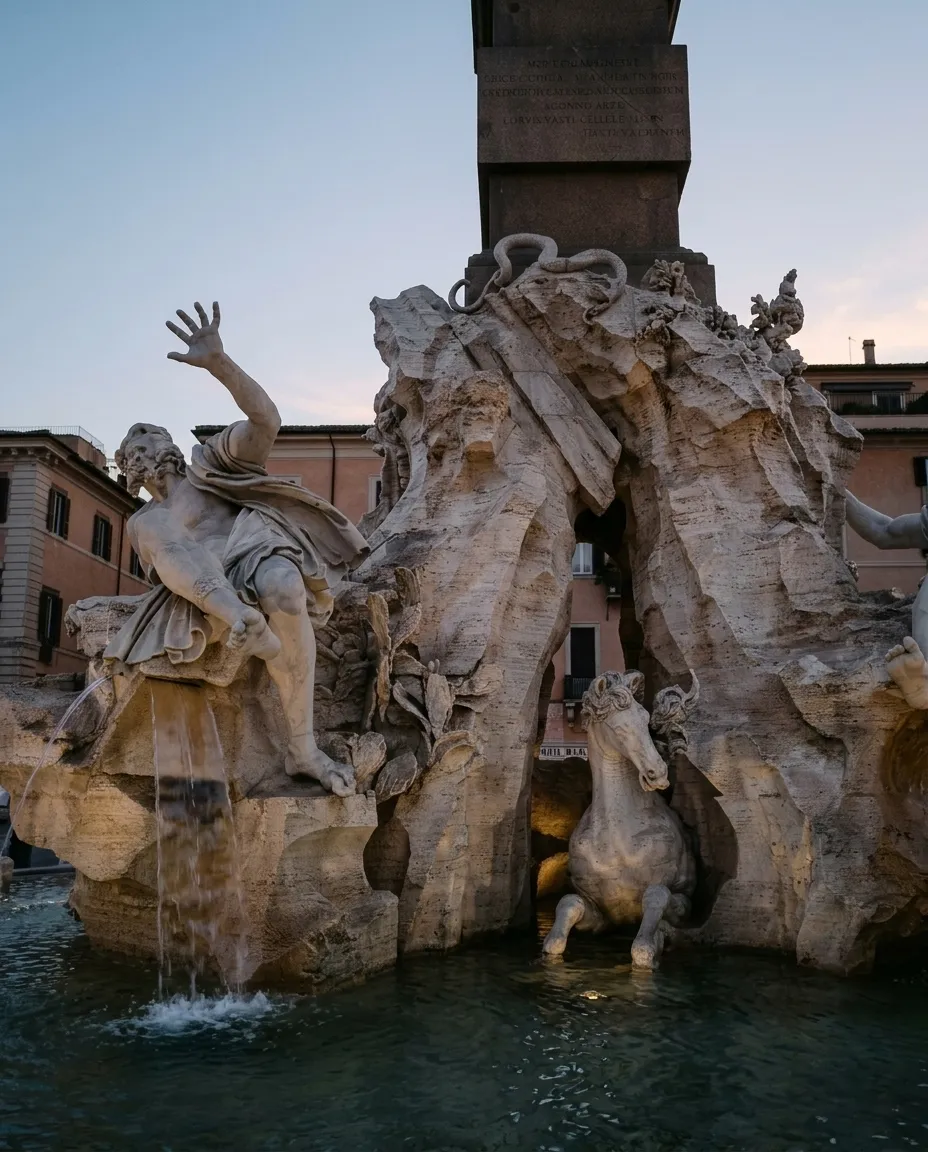
Every guide in Rome tells it, and it is a good story. Bernini and Borromini, the two great architects of the Baroque, hated each other. When Bernini built the Fountain of the Four Rivers in the middle of Piazza Navona, he made the statue of the Río de la Plata throw up an arm, as if afraid that Borromini’s church of Sant’Agnese, right in front of him, was about to fall on his head. The Nile, next to him, hides his face under a cloth so he does not have to look at it. And Borromini answered with the statue of St Agnes on the façade, a hand on her chest, reassuring everyone that the church was going nowhere.
Why it cannot be true
The two men did dislike each other; that part is real. But the fountain was finished in 1651, and work on Sant’Agnese began in 1652, with Borromini taking over the façade only in 1653. Bernini’s river god was raising his arm at a building that did not yet exist. The Nile covers his head for a plainer reason: in 1651 nobody knew where the Nile began, so the river has no face. The Río de la Plata is leaning back, startled by the snake at his feet, and the coins spilling out from under him are the silver his name promises.
The real revenge was smaller and better. Pope Innocent X Pamphilj, whose palace is the long building on the piazza, had wanted Borromini for the fountain and did not want Bernini at all. Bernini had a silver model of his design slipped into the palace where the pope would see it. The pope saw it, and is said to have sighed that the only way not to give Bernini the job was not to look at his drawings.
The stadium under your feet
The piazza is long, narrow and rounded at one end because it is a stadium. The emperor Domitian built it in 86 AD for Greek-style athletics, with room for about 30,000 people. The houses around the square stand on its seats; walk to the north end, into Piazza di Tor Sanguigna, and you can see the original arches four metres below the street. The name comes from the games themselves: in agone, “at the contests”, became n’agone, then Navona. St Agnes, a Christian girl of thirteen, was martyred in the arcades of the stadium around 304; the church stands where she died.
The summers when it was a lake
From 1652 until 1866, on the weekends of August, the drains of the three fountains were plugged and the sunken centre of the piazza was flooded. Roman nobles drove their carriages slowly through the water to cool off, while the crowd watched from the edges and the bands played. They called it the Lago di Piazza Navona. In the 1870s the pavement was raised and levelled, and the lake was gone for good.
Good to know
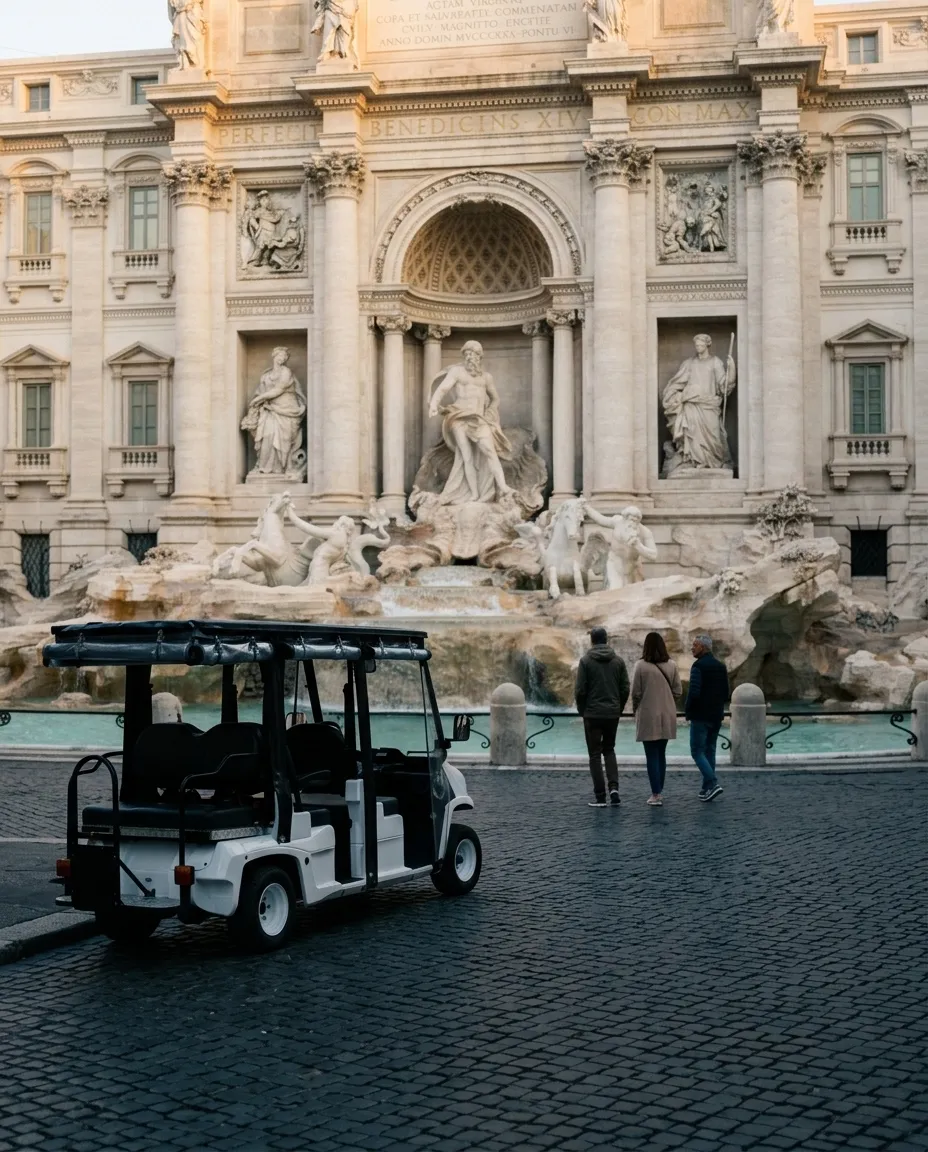
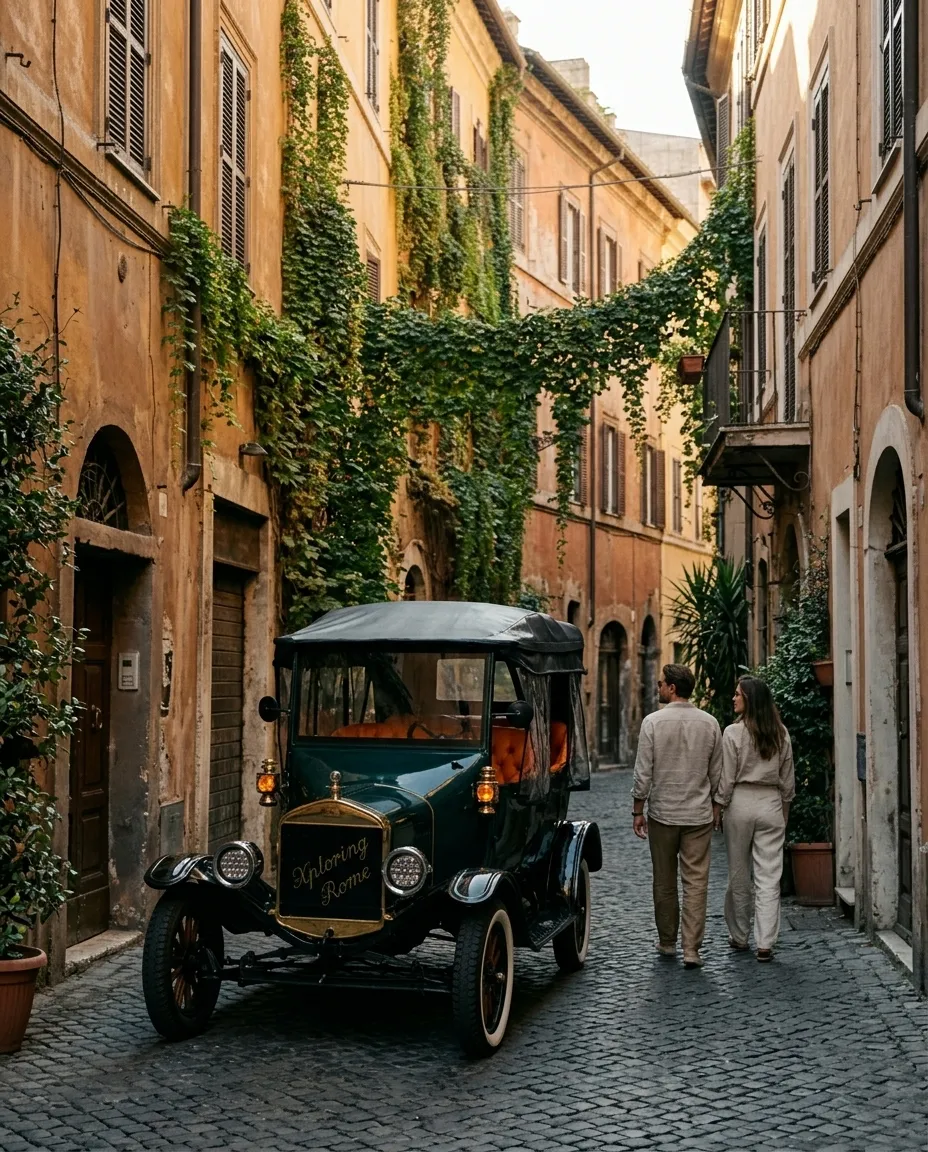
- Both our golf cart tour and our Model T tour stop here; the piazza is pedestrian, so you walk the last few metres.
- From early December to 6 January the square fills with the Befana market: sweets, toys and the witch who brings them.
- The other two fountains are worth a minute each: the Moor at the south end, whose central figure Bernini added in 1653, and Neptune at the north, which stood as an empty basin for three centuries until the statues arrived in 1878.
See it from the cart
Drive past it with us
This place is on the route of these tours: a stop, a photo and the story told by your driver.