Practical · 3 min read
Trevi Fountain in 2026: the €2 ticket, the coins and three stories
Since February 2026 the basin area costs €2. How the ticket works, where the coins go, when the piazza is empty, and the stories your driver tells there.
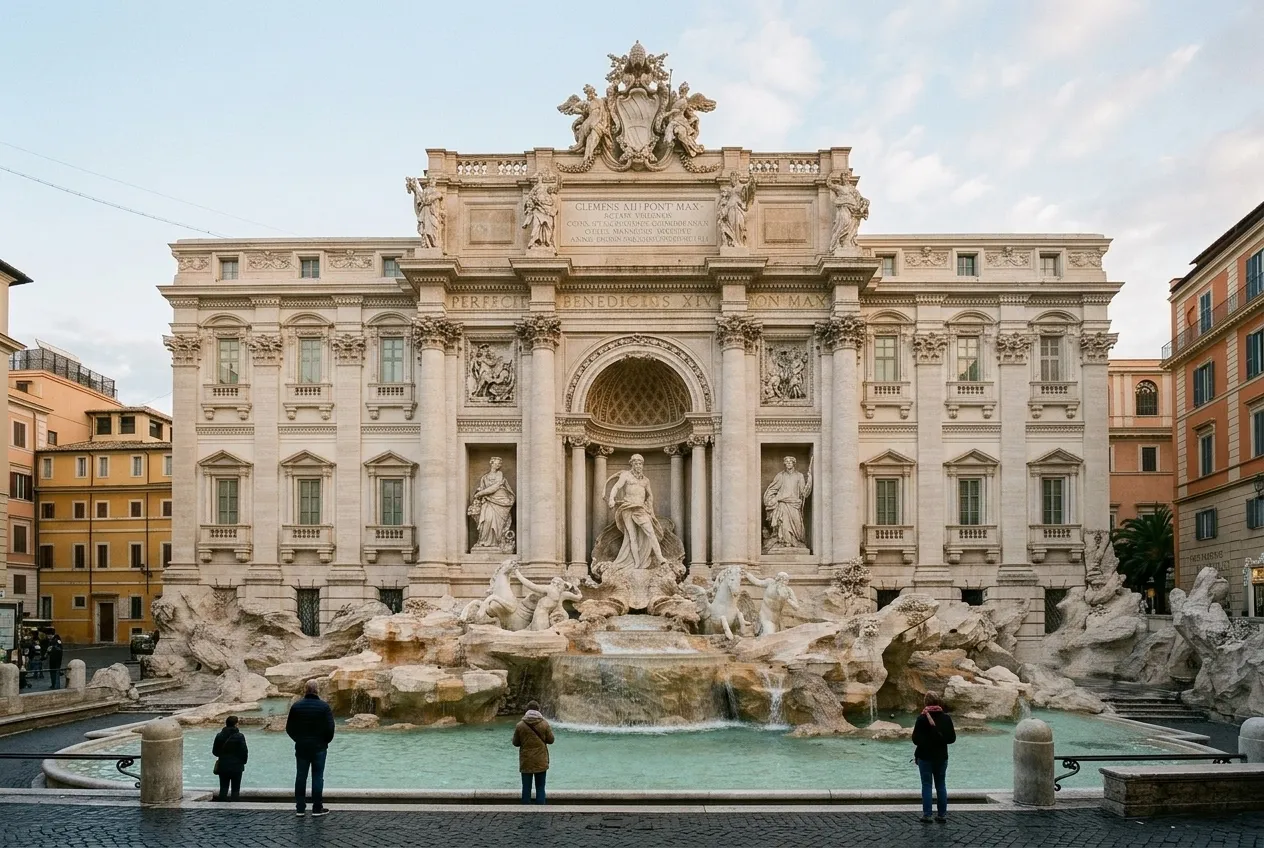
Since 2 February 2026 you need a €2 ticket to step down into the area around the basin of the Trevi Fountain. Here is how it works, and why the fountain deserves more than the two minutes most people give it.
The ticket
- It costs €2 and covers the stepped area around the basin, every day from 9:00 to 22:00. Residents of Rome and its metropolitan area (with ID), children under 5 and people with disabilities with their companion do not pay.
- You can buy it online on the official site, at the city’s Civic Museums and Tourist Infopoints, or at the entrance (card only).
- The piazza itself is free: you can see the fountain from the street at any hour without a ticket.
- The money goes to the upkeep of the fountain and the piazza, where since the end of 2024 only a few hundred people at a time are allowed down at the water’s edge.
- On our golf cart tour and our Model T tour the ticket is included for every adult.
Price, hours and exemptions checked on 23 October 2026 on the official Turismoroma page.
The coins
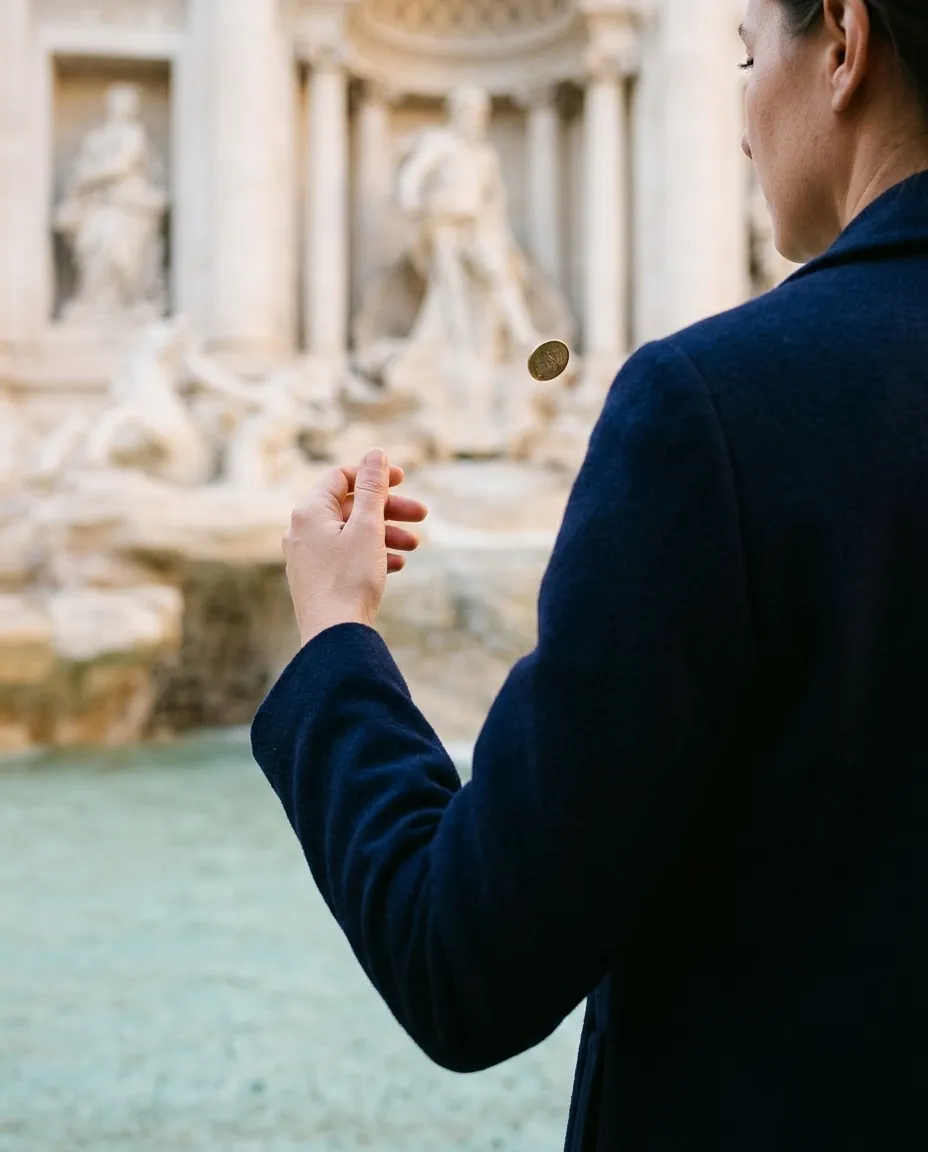
The coin ritual is younger than it looks. For centuries the saying was that whoever drank the water of Trevi would come back to Rome. The coins arrived in the 20th century and went around the world with the film Three Coins in the Fountain in 1954; six years later Anita Ekberg waded into the basin in La Dolce Vita and finished the job. The rules, for those who care: right hand, over the left shoulder, with your back to the water. One coin to return to Rome, two to fall in love, three to marry.
About a million and a half euros a year end up on the bottom. The city sweeps them out every week and hands them to Caritas, which spends them on soup kitchens and shelters. Getting into the water, on the other hand, costs a fine of several hundred euros.
Three stories
The water. The fountain is the end of the Acqua Vergine, an aqueduct that Agrippa opened in 19 BC. The name comes from a legend: Roman soldiers, dying of thirst in the countryside east of the city, were shown a spring by a young girl. The aqueduct has run almost without a break for two thousand years, nearly all of it underground, and it still feeds the fountain today. In the 18th century English travellers took jugs of it back to their lodgings: it was said to make the best tea in Rome.
The wine tax. In the 1640s Pope Urban VIII wanted a grander fountain and paid for the first works with a new tax on wine. A note appeared on Pasquino, the battered statue where Romans pinned their complaints: having taxed their wine, the pope was now refreshing the Romans with water. The fountain you see is later. It is the result of a competition won in 1732 by Nicola Salvi, who died in 1751 and never saw it finished, eleven years after him.
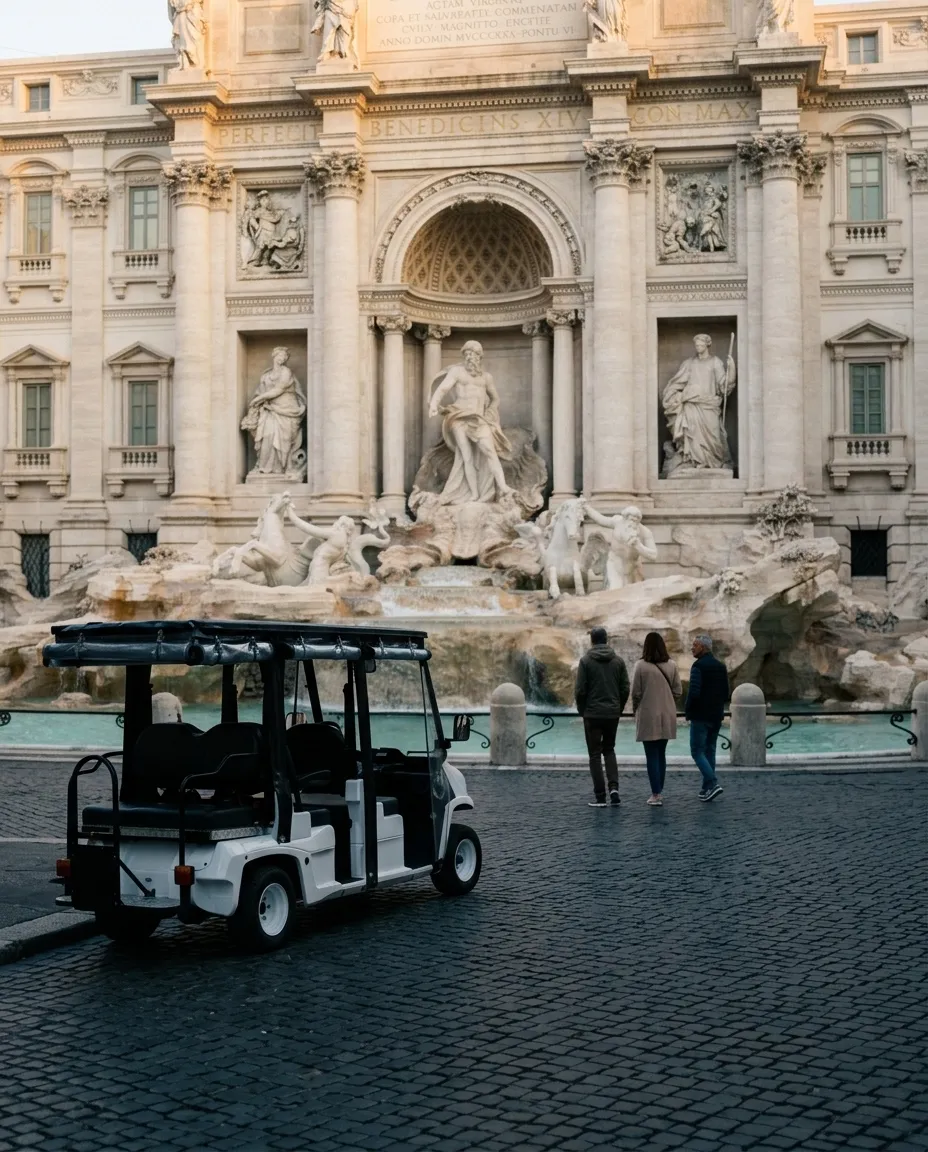
The name. Trevi is simply tre vie, three streets, which met here. Nobody designed the surprise: the fountain is just too big for its piazza. You turn a corner out of a narrow lane and there it is, taking up a whole palazzo front, with Oceanus on his shell chariot and two sea horses, one calm and one wild, because the sea is both.
When to go
- Before 8 in the morning the piazza is almost empty and the light is low and soft. Our tours leave at 10, 13, 16 and 19; the 19:00 departure sees the fountain lit up, which is a different fountain altogether.
- Sunday morning is the quietest time of the week.
- Do not sit on the edge of the basin or eat there: both are fined.
See it from the cart
Drive past it with us
This place is on the route of these tours: a stop, a photo and the story told by your driver.