Places · 3 min read
The Colosseum: a prophecy, 420 wild plants and the sailors on the roof
Why it is called the Colosseum, how a botanist counted 420 plants growing in it, and why sailors worked on its roof. The amphitheatre as your driver tells it.
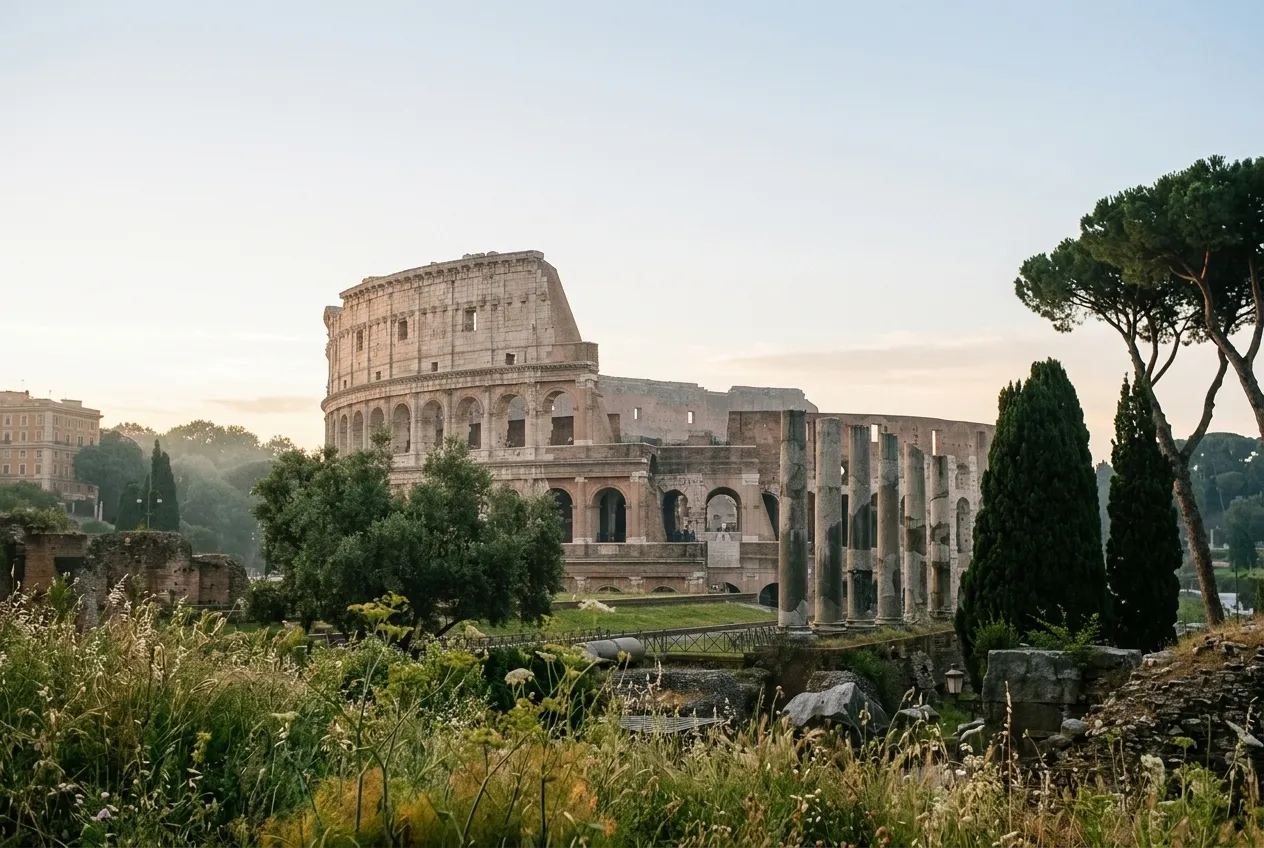
The Romans never called it the Colosseum. To them it was the Flavian Amphitheatre, after the emperors who built it: Vespasian started it in 72 AD on the drained lake of Nero’s private palace, giving back to the people the land Nero had taken, and his son Titus opened it in 80 with a hundred days of games. The nickname came centuries later, and it came from a statue.
The name
Next to the amphitheatre stood the Colossus, a bronze statue of Nero some thirty metres tall, later given a sun-god’s head and kept because nobody could face melting it down. People said “near the Colossus”, and over time the building took the statue’s name. The first time the word appears in writing is in a prophecy, in a medieval chronicle attributed to the English monk Bede: as long as the Colosseum stands, Rome will stand; when the Colosseum falls, Rome will fall; and when Rome falls, so will the world. Medieval pilgrims also believed the building had once been roofed with a dome of bronze. It had not. It had sailors.
The sailors
On hot days the arena was shaded by the velarium, a huge awning of canvas strips stretched on ropes from 240 wooden masts set into the top storey; the stone brackets that held the masts are still there, on the outside of the attic. Hauling that much canvas in the wind took men who knew ropes, so a detachment of sailors from the imperial fleet was stationed in barracks nearby to work the rigging. Fifty thousand people sat below them, admitted free through eighty numbered arches, each ticket holder finding the right staircase in minutes. Modern stadiums have not done much better.
The 420 plants
For a thousand years after the games ended the Colosseum was a quarry, a fortress of the Frangipane family, a hospital and a garden. By the 19th century the arena was a meadow with trees and ruins, like an English abbey, and travellers came to see it by moonlight because Byron had. In 1855 an English doctor, Richard Deakin, published a book that catalogued 420 species of plants growing inside it, some from Africa and Asia and found nowhere else in Europe. His guess was that their seeds had arrived in the fodder of the animals shipped in for the games, and nobody has come up with a better one. After 1870 the new Italian government cleared it all to save the stone. The botanists are still sorry. Look closely at the outer walls and you will see the capers and the wild fennel coming back.
Two more things
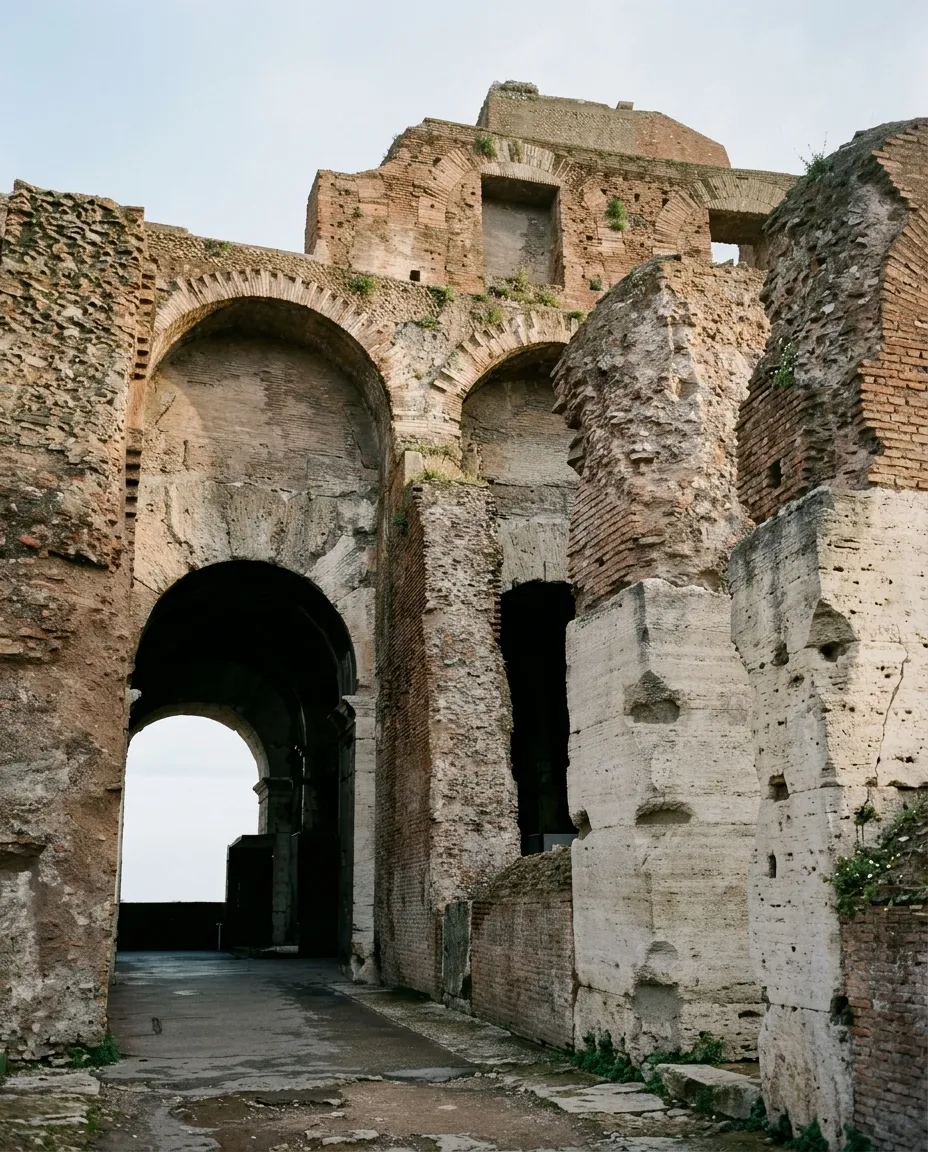
- The stone that left. The holes you see all over the travertine are where iron clamps once held the blocks together; the iron was dug out in the Middle Ages and melted down. The blocks themselves went into Palazzo Venezia, Palazzo Barberini and St Peter’s.
- The cross. It was put up in 2000 at the edge of the arena to remember the Christian martyrs. Whether any were actually killed here is uncertain; the executions we know about happened in the Circus Maximus and in Nero’s gardens, where the Vatican is now.
Good to know
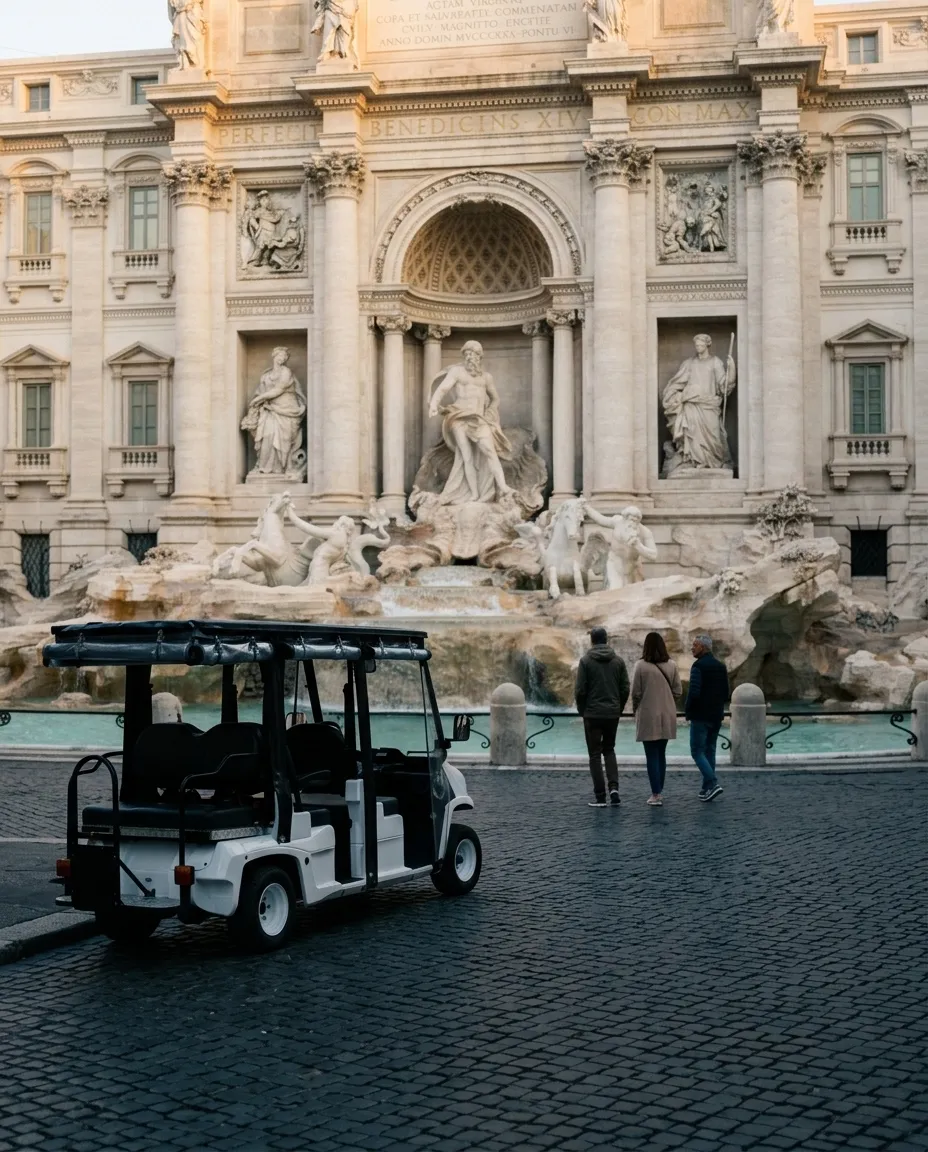
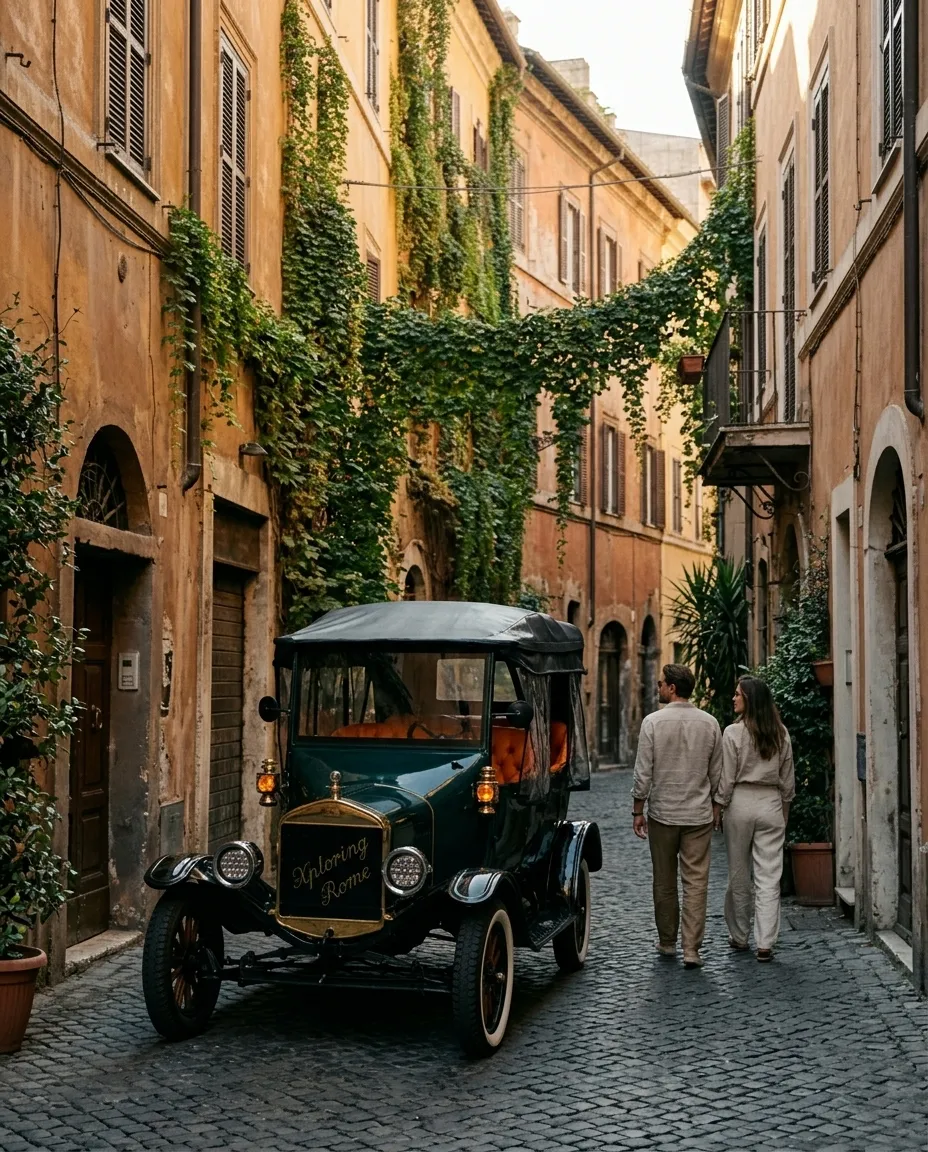
- Our golf cart tour and our Model T tour make a photo stop outside the arena. The outside is the part most people photograph anyway, and on the 19:00 departure, at blue hour, it is lit.
- Going inside needs a timed ticket bought in advance; allow 90 minutes to two hours. The underground and the top tiers are separate tickets.
- The quietest moment outside is before 8:30 in the morning, when the ground is still in shade and the top rows catch the sun.
See it from the cart
Drive past it with us
This place is on the route of these tours: a stop, a photo and the story told by your driver.