Places · 4 min read
Why a cannon fires over Rome every day at noon
Since 1847 a cannon has fired at noon so Rome's bells ring together. The Janiculum: the Fontanone, Garibaldi's last stand and the view everyone photographs.
If you are anywhere in the centre of Rome at midday and hear a dull boom roll across the roofs, that is not a storm. It is a howitzer on the Janiculum hill, and it has been doing this almost every day since 1847.
The cannon
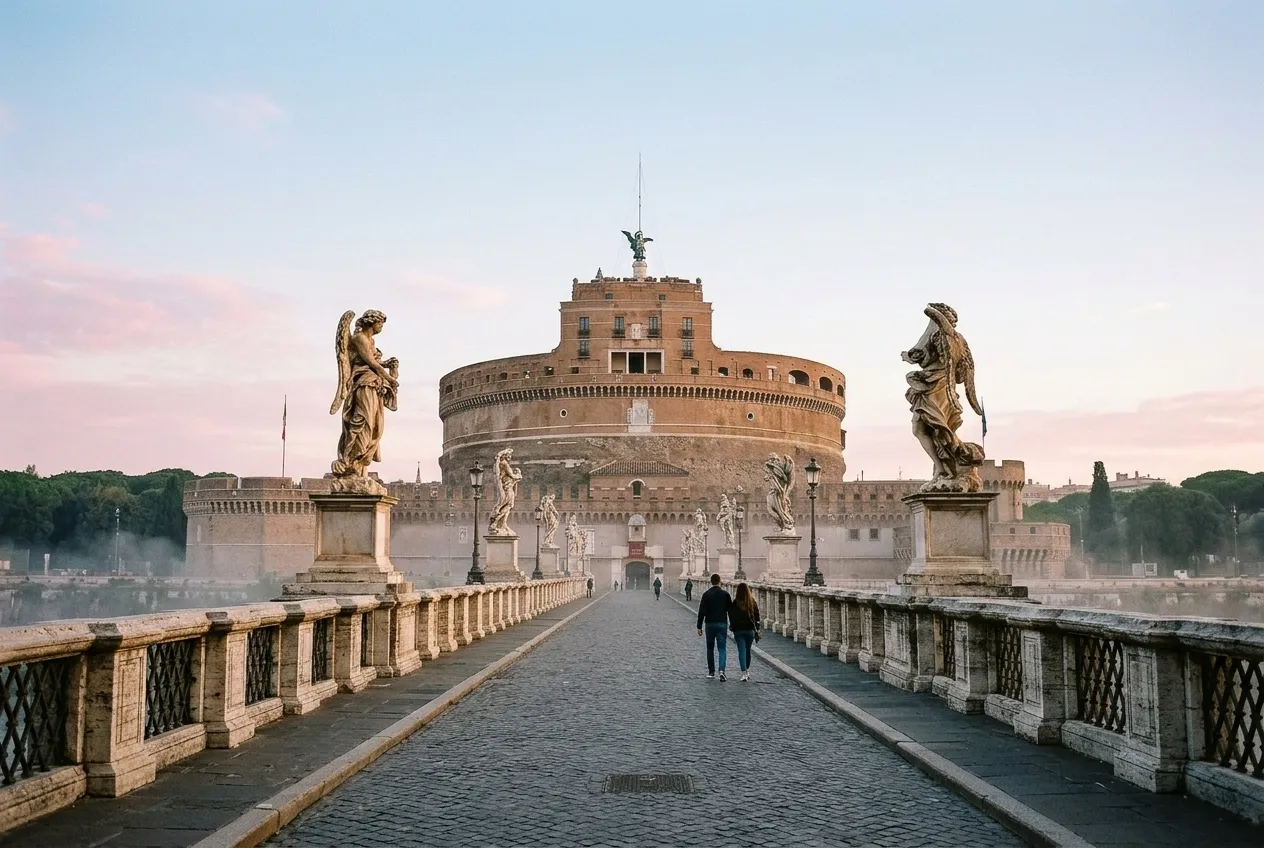
In the 1840s the churches of Rome each kept their own time, and the noon bells rang out one belfry after another for a good quarter of an hour. Pope Pius IX decided the city needed a single signal: from 1 December 1847 a cannon was fired at midday from Castel Sant’Angelo, and every sacristan set his bells by it. The gun moved to Monte Mario in 1903 and to the Janiculum terrace the following year, where it has stayed. It fell silent during the Second World War and for fourteen years after, then started again on 21 April 1959, Rome’s birthday. Today a small detachment of soldiers wheels a 1930s field gun onto the ramp below the terrace, waits for the stroke of twelve and fires a blank. The pigeons leave; the tourists jump; the Romans check their watches.
The big fountain
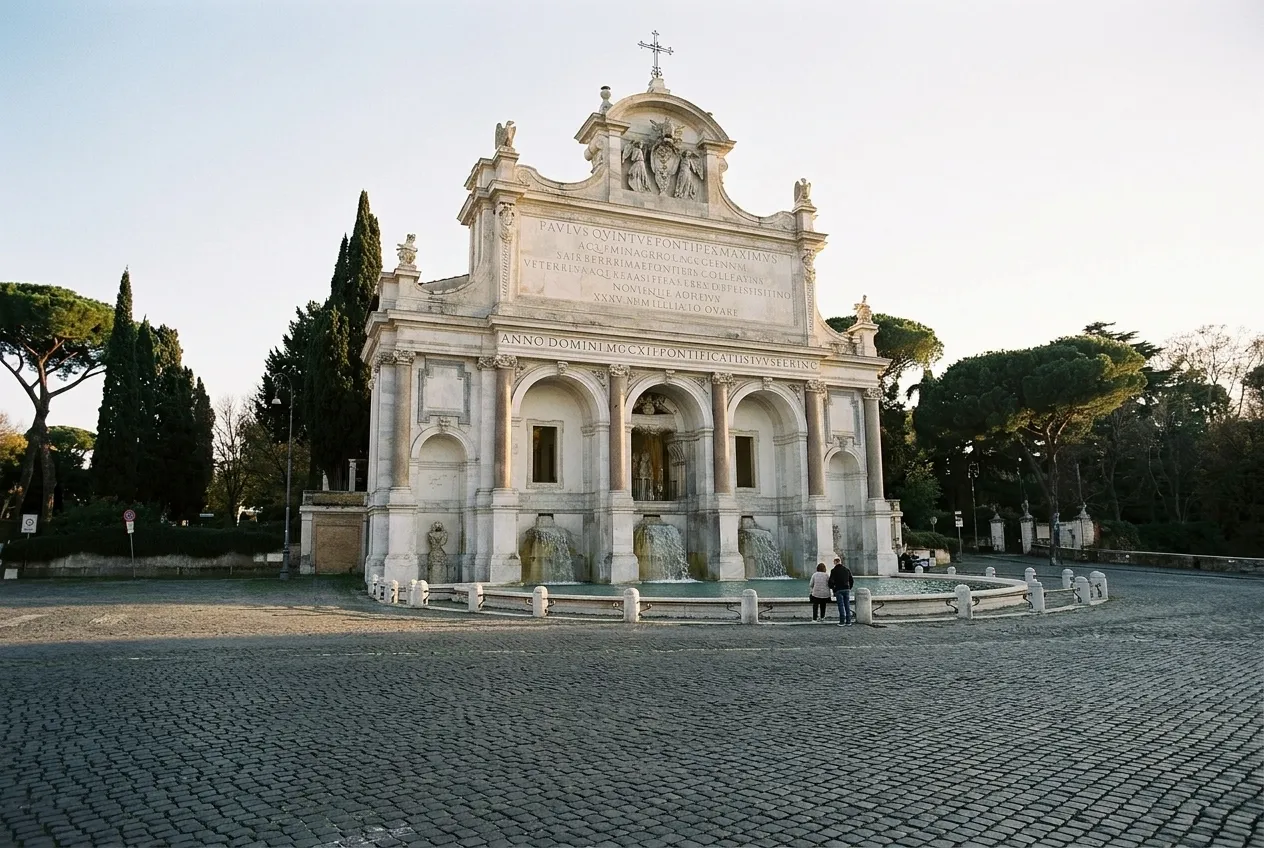
At the top of the hill, where the road from Trastevere arrives, stands a white marble façade with five arches and water thundering out of three of them into a wide basin. Romans call it er Fontanone, the big fountain. Pope Paul V Borghese built it in 1612 to celebrate the end of an aqueduct he had restored, the ancient Aqua Traiana, and he was not shy about materials: the marble came from the Forum of Nerva and the columns from the old St Peter’s, which was being demolished at the time. The water was another matter. It tasted so bad that Romans coined a saying still in use: something that is worth nothing is “worth as much as the Acqua Paola”. If the fountain looks familiar, it is because the film La Grande Bellezza opens here.
Garibaldi’s last stand
The hill is covered with marble busts, and almost all of them are men who died here in 1849. That spring the short-lived Roman Republic, with Garibaldi commanding its volunteers, held the Janiculum for a month against a French army sent to restore the pope. They lost, and Garibaldi rode out of Rome with his men and his pregnant wife Anita, who died on the retreat. Both are up here now: he on a bronze horse in the middle of the piazza, looking towards the Vatican, and she a little further along, also on horseback, with a pistol in one hand and a baby in the other. The busts along the avenue are his officers and soldiers; the small one of a boy is a drummer.
The terrace
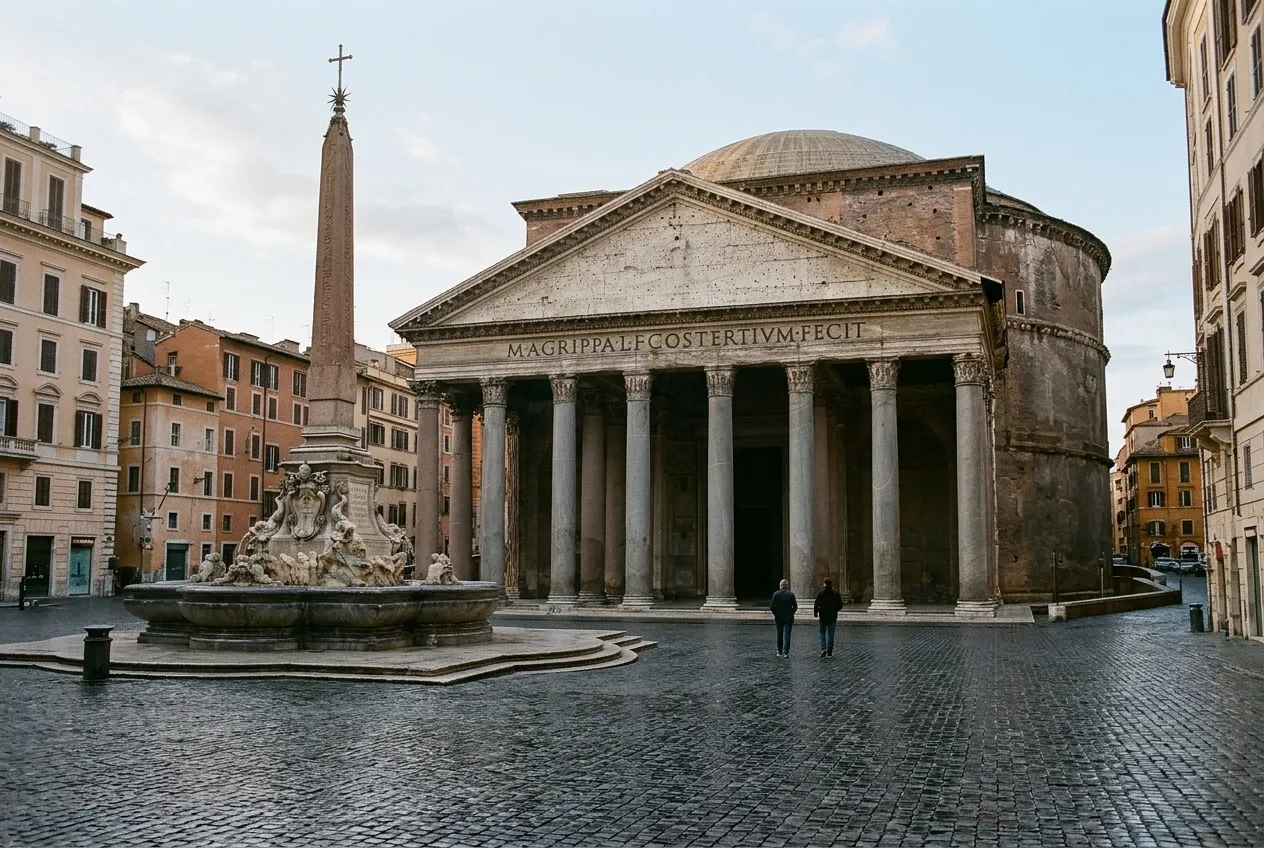
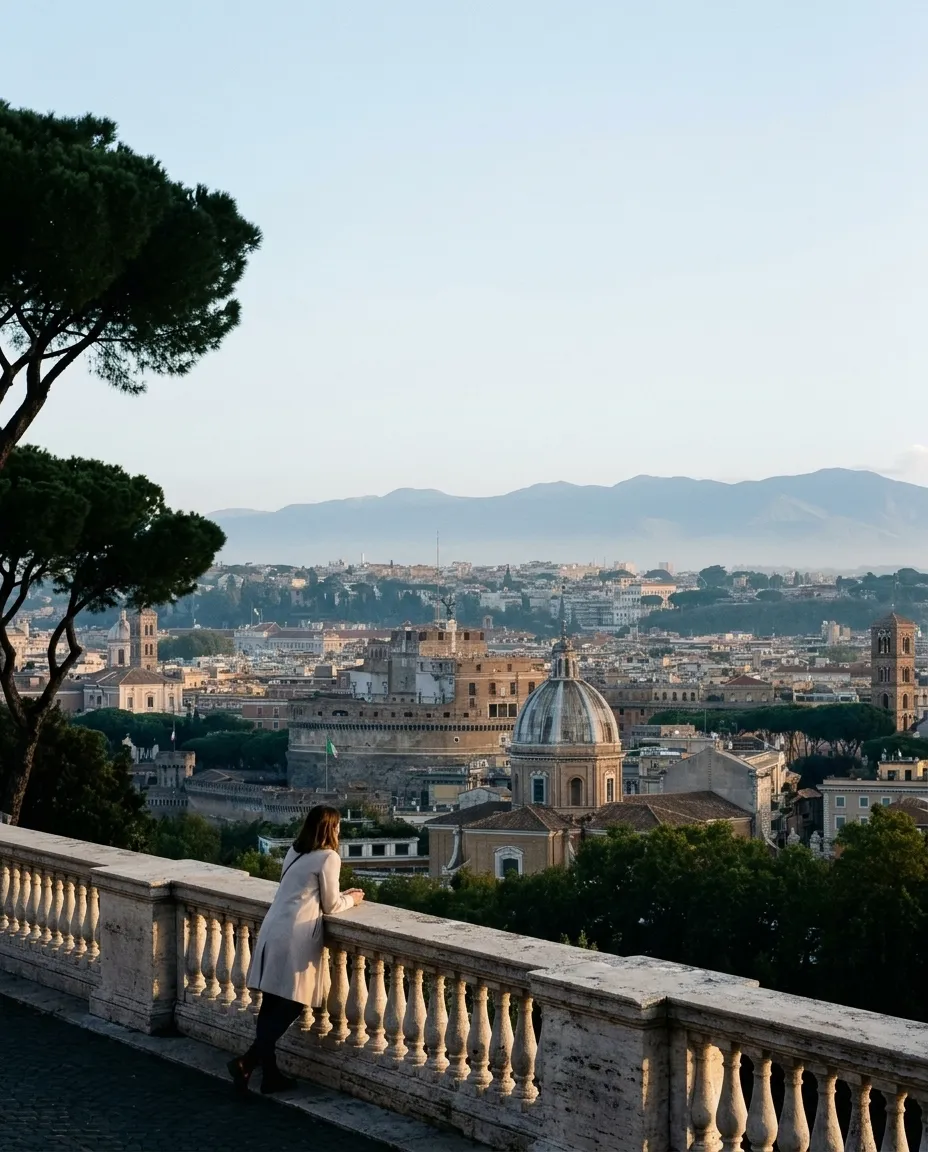
The balustrade in front of Garibaldi’s monument is the classic view of Rome: the domes of the centre, the Vittoriano, the Quirinale, the Alban hills on the horizon, with the flat dome of the Pantheon among the roofs and St Peter’s behind you. Dawn has the best light, noon has the cannon, and in the evening the whole terrace turns to face the city as the lamps come on. On weekends there is often a puppet theatre for the children, a Roman tradition older than anyone can remember.
Two more stops
- The Tempietto. In the courtyard of San Pietro in Montorio, halfway up the hill, Bramante built in 1502 a small round temple on the spot where, according to tradition, Peter was crucified. It is the size of a garden pavilion and the model for every dome built in the following four centuries, including St Peter’s.
- Tasso’s oak. At the far end of the avenue, by the church of Sant’Onofrio, the stump of a huge oak is held together by iron bands. The poet Torquato Tasso sat under it in the last weeks of his life, in 1595, waiting to be crowned poet laureate on the Capitol. He died a week before the ceremony.
Good to know
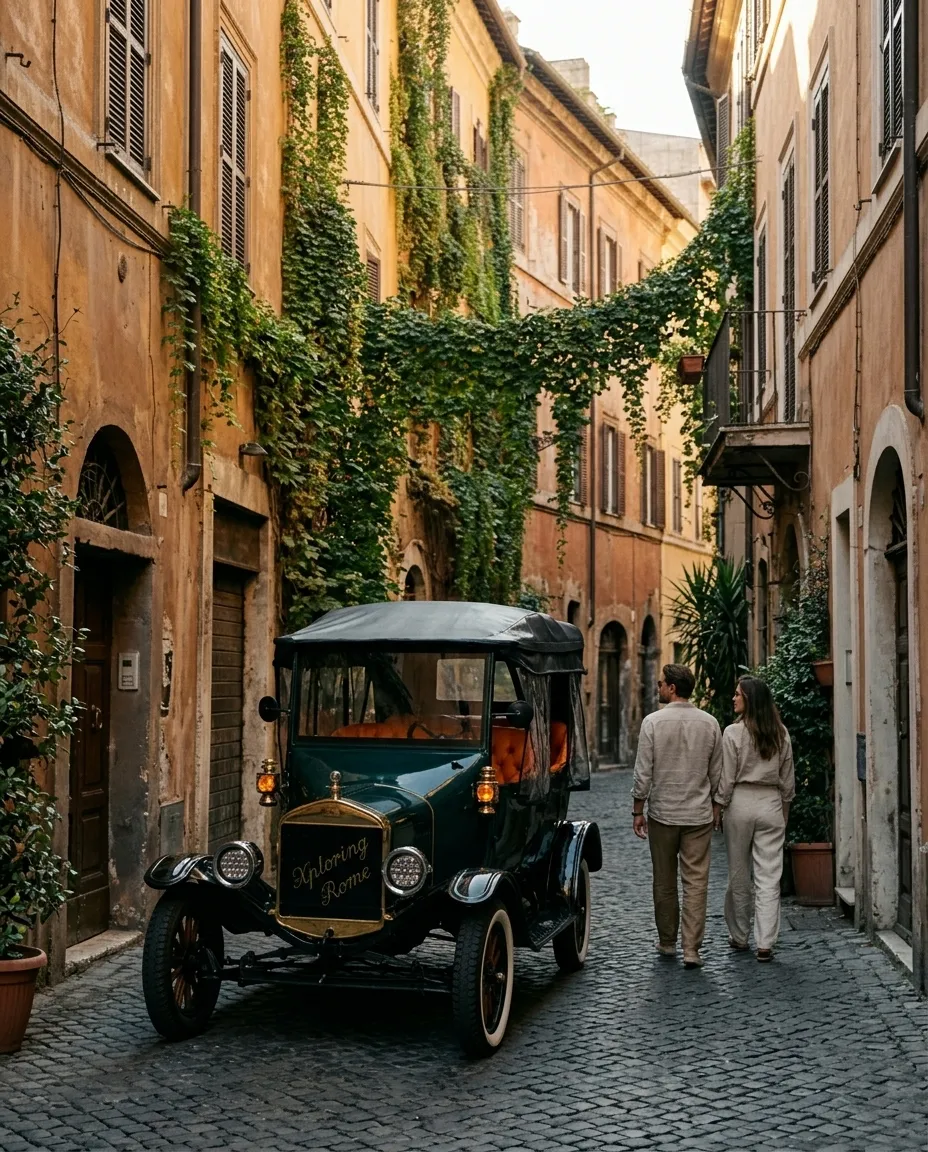
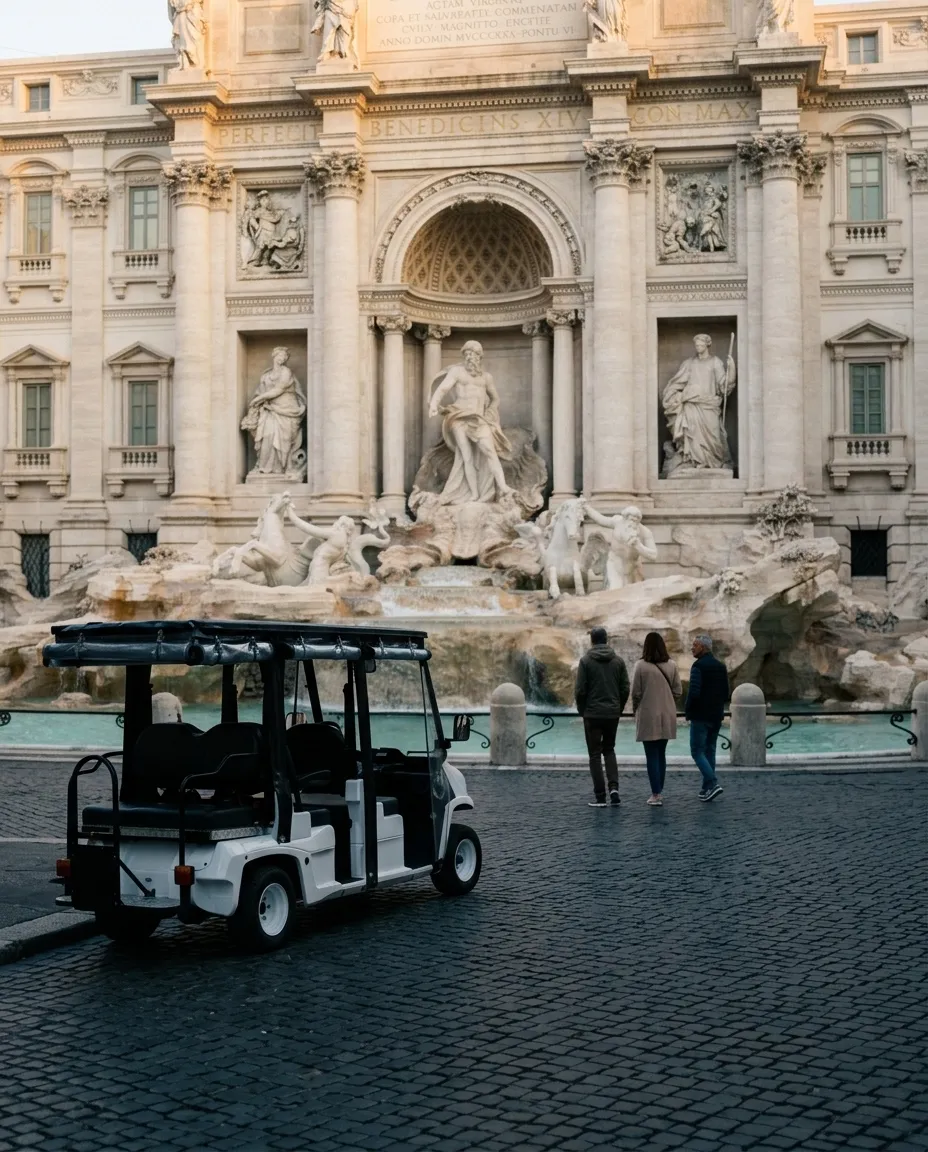
- The Janiculum is not on the standard route of our tours, but it is a ten-minute climb from Trastevere and a favourite detour of our drivers. Ask about it when you book: on a private Model T or golf cart tour, the route is yours.
- The cannon fires at 12:00 sharp. Be on the terrace by 11:50 and stand to the left of the balustrade to see the gun.
- The Fontanone is free and never closes; the terrace is at its emptiest before 9 in the morning.
See it from the cart
Drive past it with us
This place is on the route of these tours: a stop, a photo and the story told by your driver.