Places · 3 min read
The Spanish Steps were paid for by the French (and other surprises)
French money, a Spanish embassy, a boat stranded by a flood and a poet who died at number 26. What to know before you stand (not sit) on the Spanish Steps.
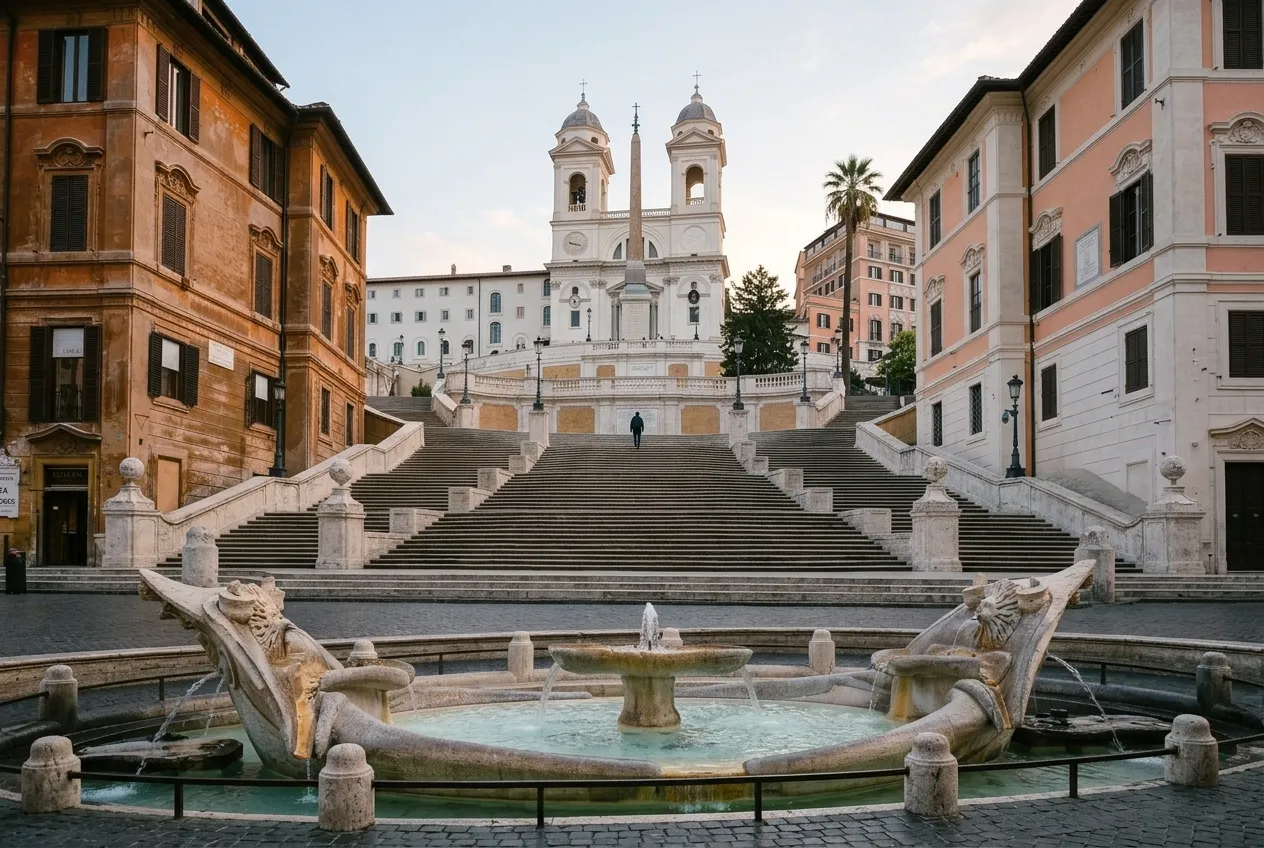
Everybody calls them the Spanish Steps. The church at the top is French, the money that built them was French, and the Spanish part is an embassy that happened to be in the square below. Rome has never been strict about names.
French money, Spanish name
Trinità dei Monti, the twin-towered church on the hill, was founded by the kings of France in the 1490s and still belongs to France. For two centuries the slope below it was a muddy bank, and the French wanted a grand stairway up to their church, ideally with a statue of Louis XIV at the top. The popes said no to the statue. The money came from a French diplomat, Étienne Gueffier, who died in 1660 and left his fortune for the purpose; it took more than sixty years of arguing before the architect Francesco De Sanctis built the 135 steps, between 1723 and 1726, in curves and terraces that open and close like a fan. The square at the bottom took its name from the palace of the Spanish ambassador to the Holy See, which has stood there since 1647. So: French steps, Spanish square.
The boat
The fountain at the foot of the steps is a leaking boat, half sunk in its basin. Pietro Bernini, father of the famous one, made the Barcaccia in 1629 for Urban VIII, whose bees and suns decorate the stern. The story Romans tell is that in the great flood of 1598 the Tiber rose so high that a boat was left stranded here when the water went down. The practical reason is less poetic: the aqueduct that feeds the square, the same Acqua Vergine that fills the Trevi Fountain, arrives here with very little pressure, so a fountain that lies low in the ground and dribbles rather than sprays was the only kind that would work.
Number 26
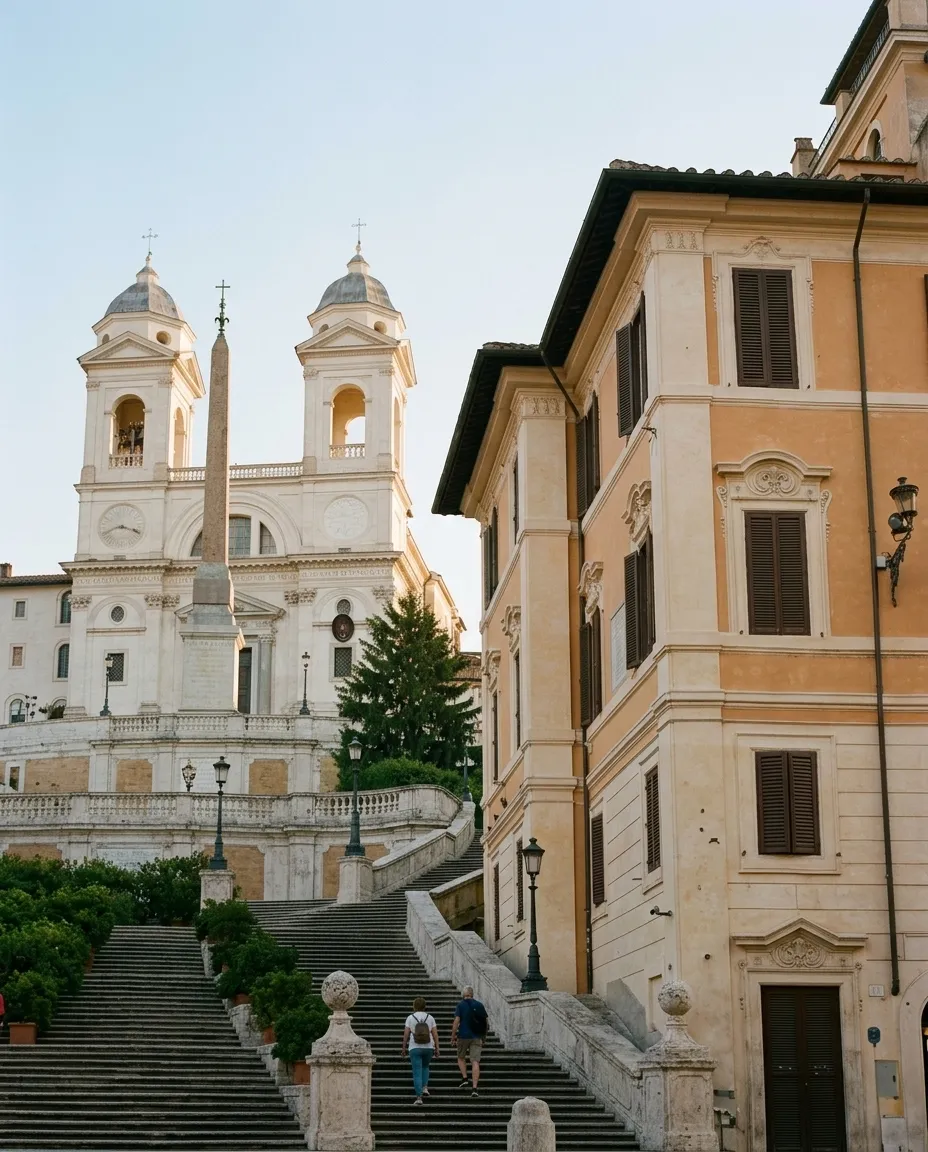
The pink-ochre house to the right of the steps is where the poet John Keats died on 23 February 1821, aged 25, of tuberculosis, in a small room overlooking the fountain. He had come to Rome for the climate and lasted three months. The house is now a museum of Keats, Shelley and Byron, with his death mask and the room, refurnished after the papal health officers burned everything in it, as the law on consumption required. Across the square, the tea room founded by two English ladies in 1893 is still serving scones.
The rules
Since 2019 you may not sit on the steps; the fine starts at a few hundred euros, and there are officers whose whole job is to blow a whistle at you. You may stand, walk and photograph. For a few weeks in April and May the steps are lined with pots of azaleas; on 8 December firefighters climb a ladder to lay a wreath on the Virgin at the top of the column in the square, and the pope comes to watch.
Good to know
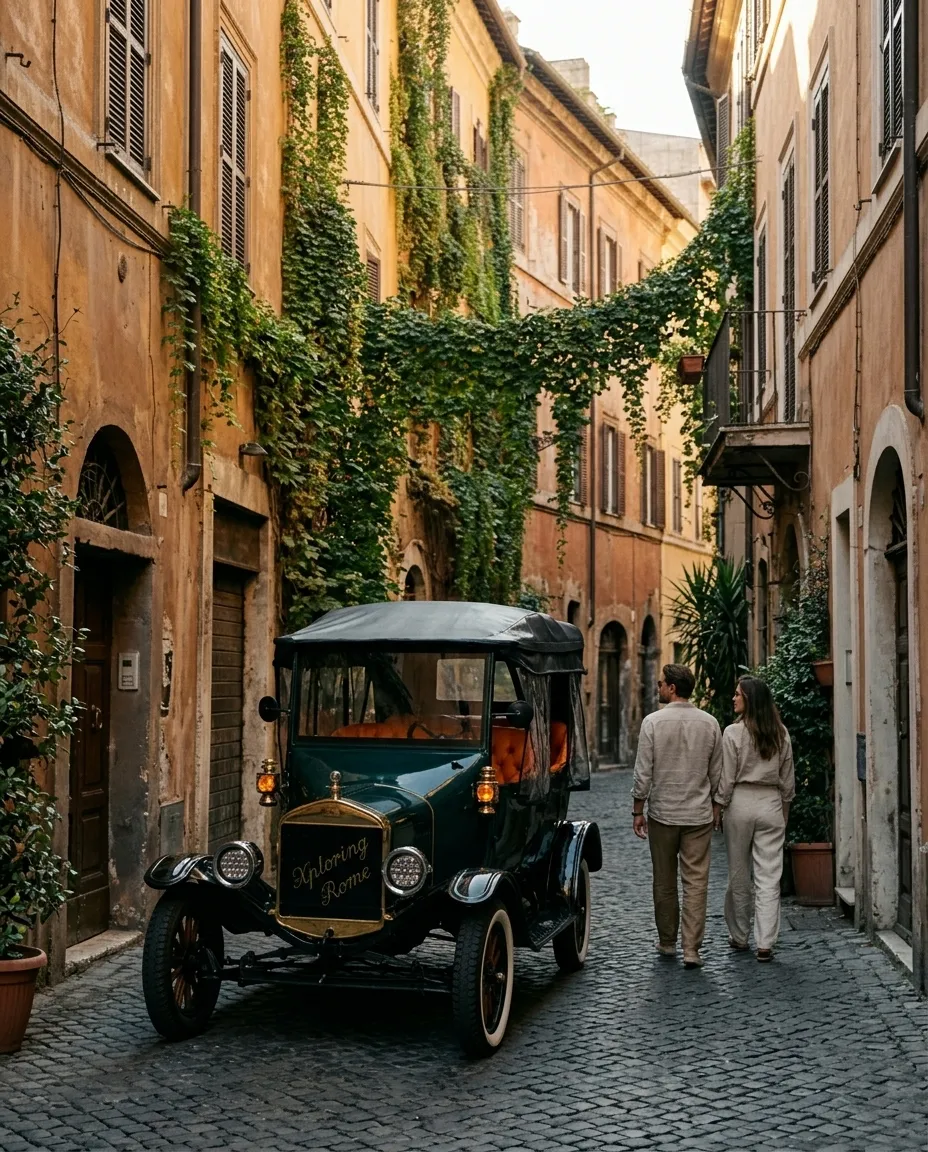
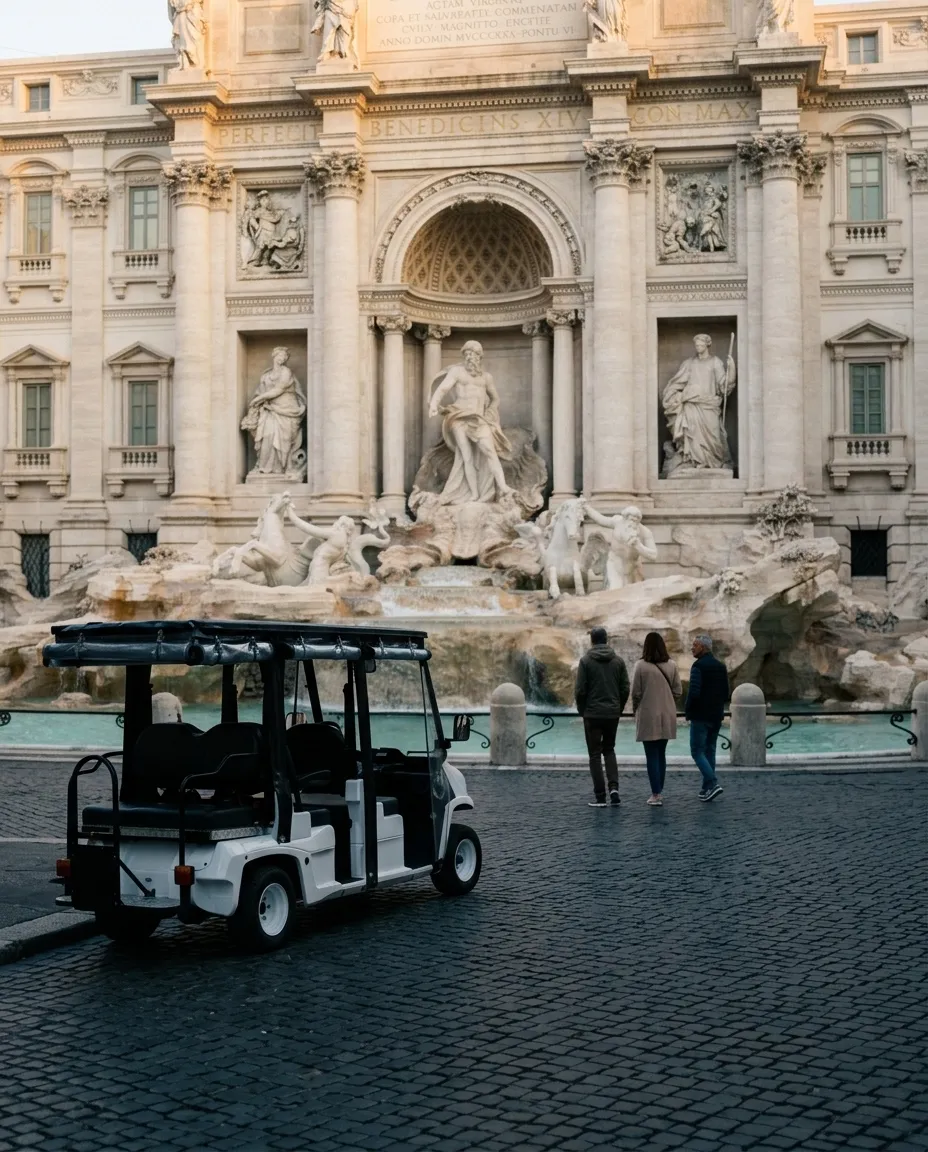
- Our Model T tour makes a photo stop here, and so does our golf cart tour. The best photograph of the steps is from the top, by the obelisk, looking down Via Condotti.
- Via Condotti, the street of the great fashion houses, starts at the fountain. The Antico Caffè Greco, open since 1760 at number 86, closed in the autumn of 2025 after a long dispute over its lease: check whether it has reopened before you plan a coffee there.
- Early morning and the 19:00 departure are the two moments when the steps are nearly empty.
See it from the cart
Drive past it with us
This place is on the route of these tours: a stop, a photo and the story told by your driver.